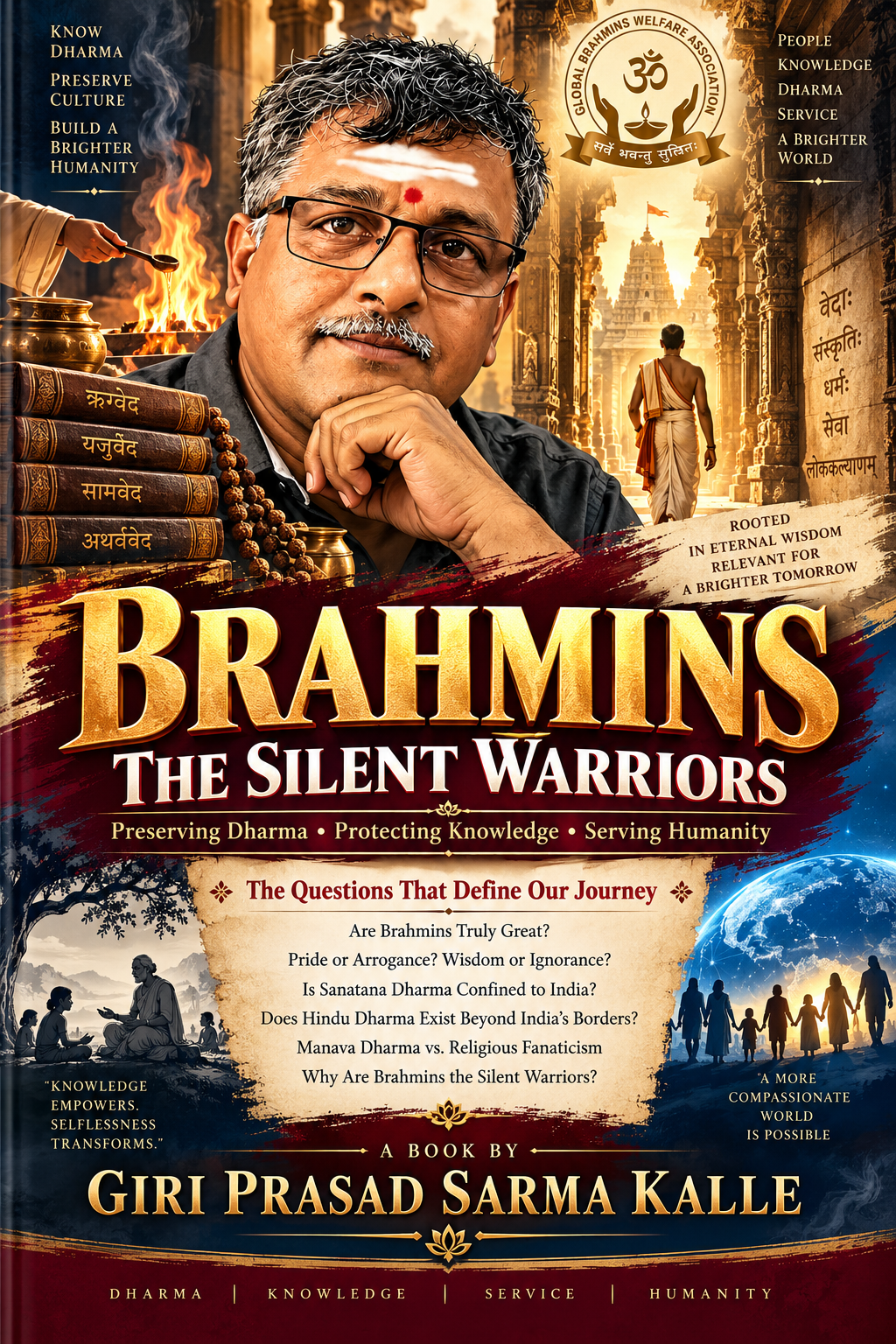
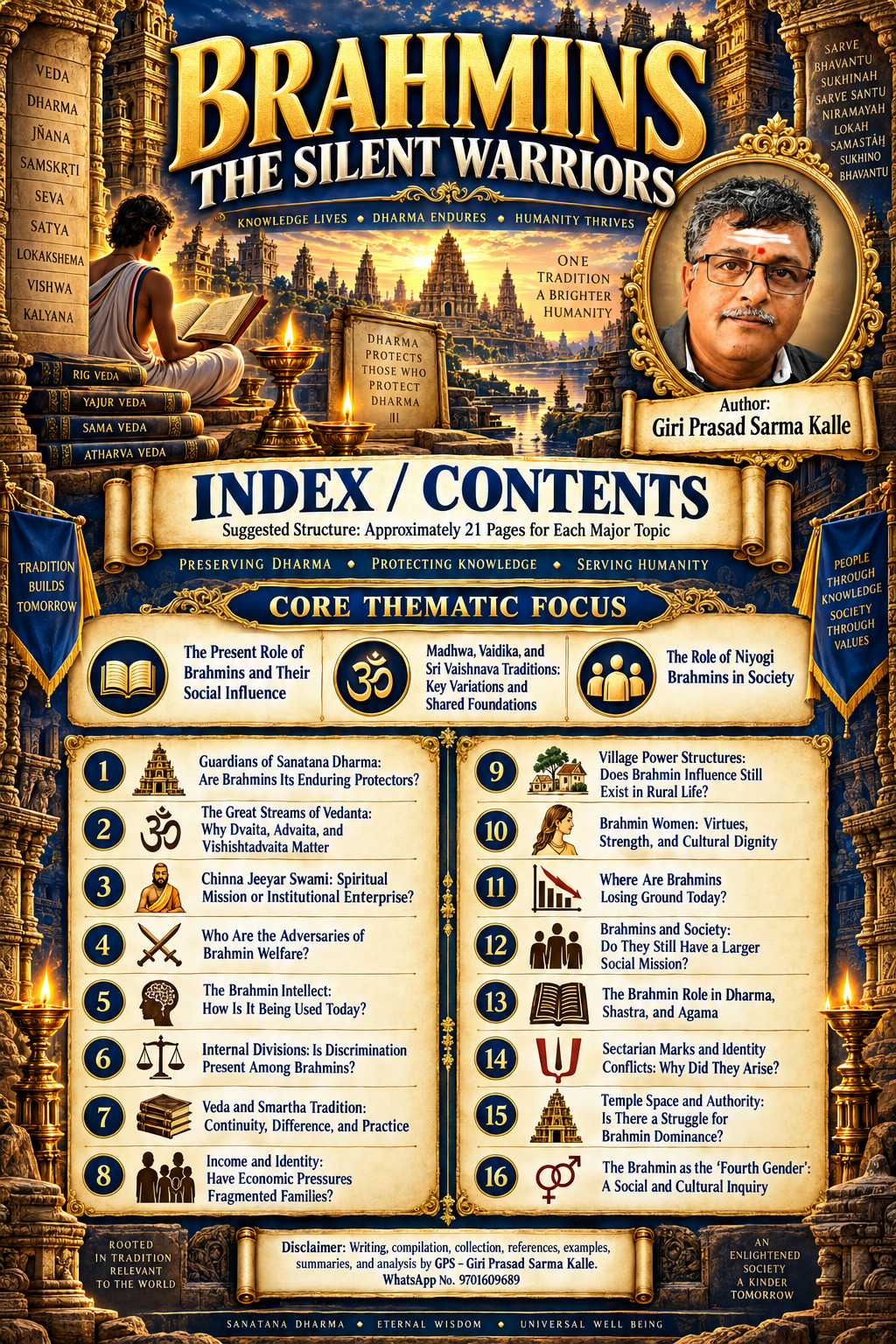
BRAHMINS: THE SILENT WARRIORS
Sanatana Dharma Beyond India
1. Is Sanatana Dharma Confined to India?
Sanatana Dharma is not merely a religious identity, a geographical inheritance, or a collection of rituals. It is an ancient spiritual tradition that addresses the relationship between human beings, nature, society, and the Divine.
Its historical roots lie in the Indian subcontinent, but its spiritual teachings and cultural influence have travelled far beyond India's geographical boundaries.
I believe that Dharma must be understood through its fundamental principles: truth, compassion, self-discipline, knowledge, righteousness, and service to humanity.

A river does not lose its identity when it crosses a boundary. Similarly, the essential values of Sanatana Dharma are not confined to the land in which its traditions originated.
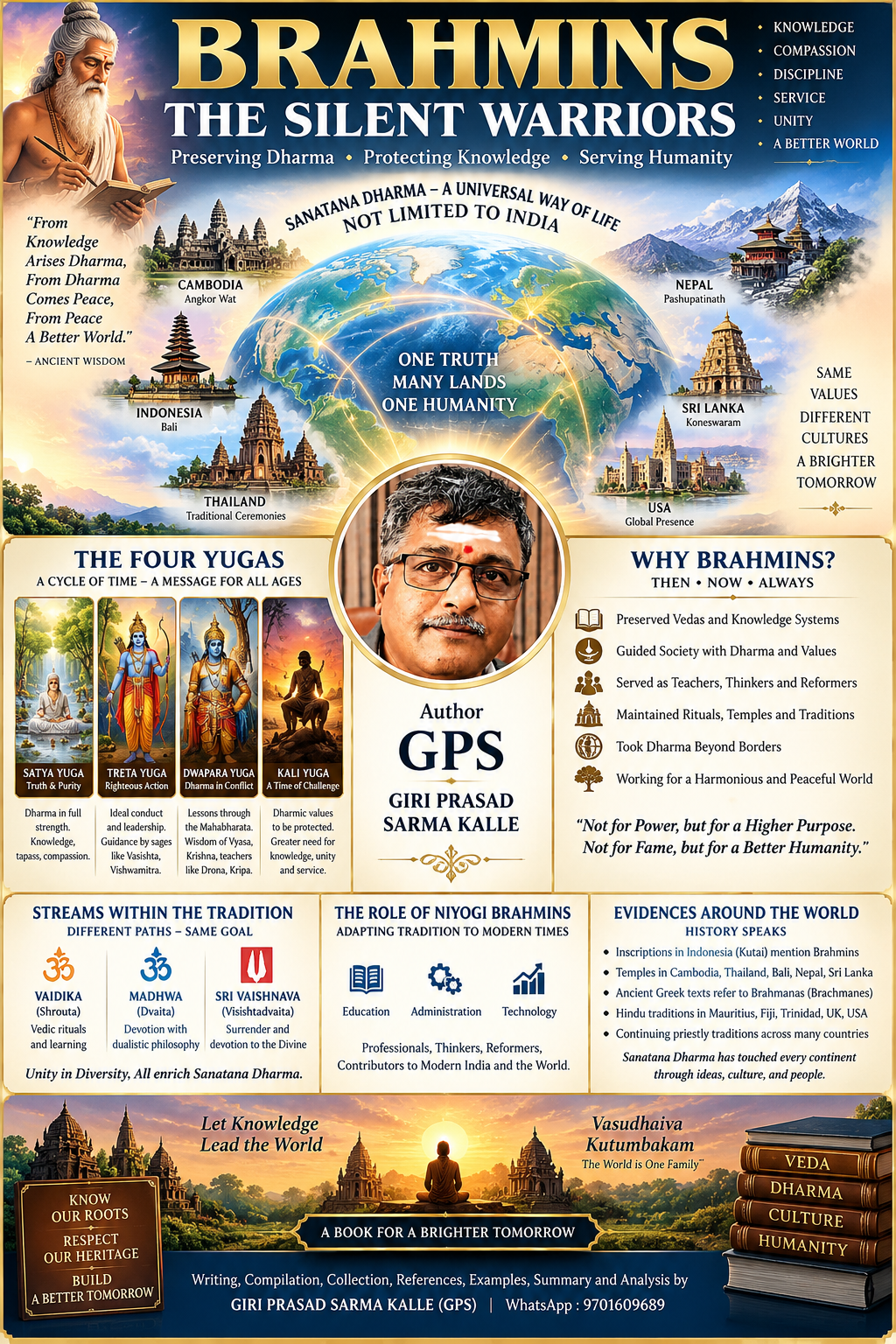
The temples of Cambodia, the Hindu traditions of Bali, the sacred ceremonies of Thailand, and the continuing worship of Hindu communities across the world demonstrate the geographical reach of our religious and cultural heritage.
Who preserved these traditions? Who carried the scriptures across generations? Who taught the mantras, maintained the temples, interpreted the Shastras, and transmitted knowledge from teacher to disciple?
Among the many communities and individuals who contributed to this extraordinary journey, Brahmin scholars, priests, teachers, and spiritual leaders have played a significant role. Their contributions deserve recognition, historical examination, and preservation.
2. The Four Yugas: Dharma Through the Ages
According to Hindu cosmological tradition, time moves through a recurring cycle of four Yugas: Satya Yuga, Treta Yuga, Dwapara Yuga, and Kali Yuga. Each Yuga represents a distinct condition of human society and the practice of Dharma.
These are sacred chronological and philosophical concepts described in Hindu scripture. Their traditional durations belong to Puranic cosmology rather than independently established archaeological chronology.
| Yuga | Traditional Duration |
|---|---|
| Satya Yuga | 1,728,000 years |
| Treta Yuga | 1,296,000 years |
| Dwapara Yuga | 864,000 years |
| Kali Yuga | 432,000 years |
| One Mahayuga | 4,320,000 years |
Traditional Puranic chronology, including the transitional periods of each Yuga.
Satya Yuga is described in Hindu tradition as an age in which truth, compassion, austerity, and charity are firmly established. It represents the ideal of righteous living, in which human conduct is guided by spiritual awareness and moral discipline.
The traditions associated with this age emphasize the importance of Rishis, meditation, self-realization, and the pursuit of eternal knowledge.
Treta Yuga is traditionally associated with the Ramayana and the life of Lord Sri Rama. The Ramayana presents several great sages whose contributions extend beyond religious rituals.
Maharishi Vasishta represents spiritual guidance and the responsibilities of a royal teacher. Maharishi Vishwamitra demonstrates the importance of disciplined learning, spiritual achievement, and the transmission of knowledge. Maharishi Valmiki, revered as the Adikavi, represents the power of literature to preserve moral ideals across generations.
Their significance lies not simply in their association with sacred knowledge, but in the way they used knowledge to guide individuals and society. The Ramayana portrays the relationship between Dharma and governance, between spiritual wisdom and public responsibility.
The role of a teacher was not limited to performing ceremonies. A teacher was also expected to provide guidance in matters of character, duty, education, and righteous conduct. This understanding remains relevant to the Brahmin community today.
Dwapara Yuga is associated with the Mahabharata and the life of Lord Sri Krishna. The Mahabharata presents a world in which knowledge, power, personal relationships, ambition, and moral responsibility frequently come into conflict.
Maharishi Veda Vyasa is traditionally revered as the compiler of the Vedas and the author of the Mahabharata. The epic also describes teachers such as Dronacharya, Kripacharya, and Maharishi Sandipani, whose roles illustrate different dimensions of education, discipline, duty, and spiritual guidance.
What is the value of knowledge when it is not accompanied by the courage to act according to Dharma?
The possession of knowledge does not automatically ensure righteous conduct. Even a highly learned person must examine personal attachments, prejudices, ambition, and the consequences of his decisions.
According to traditional Hindu chronology, the present age is Kali Yuga. In this age, the challenge is not simply to preserve ancient knowledge, but to make its teachings meaningful in a rapidly changing society.
The Brahmin community today is engaged in diverse fields, including religious service, education, administration, literature, law, science, technology, and social welfare. The responsibility of a Brahmin cannot be measured solely by the number of rituals performed or the number of scriptures memorized. It must also be examined through the manner in which knowledge is preserved, transmitted, and placed in the service of society.
Are we protecting our sacred traditions? Are we educating our children about our cultural inheritance? Are we maintaining the dignity of our teachers and priests? Are we supporting economically disadvantaged families within our community? Are we applying our knowledge and abilities for the welfare of others?
These questions determine how the Brahmin heritage will continue in the present age.
3. Why Do Brahmin Traditions Preserve the Concept of the Yugas?
The concept of the four Yugas does not belong exclusively to Brahmins. It forms part of the broader Hindu scriptural and cosmological tradition. However, Brahmin educational and priestly traditions have played an important role in preserving and transmitting this understanding of time.
Through the study of the Vedas, Puranas, Itihasas, Dharma Shastras, and traditional systems of calendrical calculation, successive generations of scholars have maintained the continuity of these teachings.
The Yuga concept is also reflected in traditional Sankalpa, Panchanga calculations, and certain religious observances. When a priest recites a Sankalpa, the ritual is situated within a broader conception of time and place. References to Kali Yuga, the traditional geographical divisions, the year, the month, and the lunar day connect an individual act of worship with a larger sacred chronology.
These traditions reveal an important aspect of Brahmin heritage: the preservation of knowledge requires discipline, memory, systematic teaching, and continuity across generations. A written scripture may survive for centuries. However, the living tradition of its pronunciation, interpretation, and practice depends upon people who dedicate their lives to its preservation. That contribution is one of the important subjects of this book.
4. Brahmins Beyond India: What Does History Reveal?
Sanatana Dharma reached different parts of the world through maritime trade, cultural exchange, royal patronage, religious scholarship, migration, and the movement of communities. The historical evidence of this expansion is found in inscriptions, temples, literature, religious ceremonies, and living cultural traditions.
The presence of a Hindu temple does not, by itself, establish that Brahmins alone introduced or maintained Hinduism in that region. Nevertheless, several historical sources directly identify Brahmin scholars and priests and document their involvement in religious and cultural institutions outside India.
The Kutai Yupa inscriptions of East Kalimantan, generally dated to the fourth or fifth century CE, provide important evidence of Brahmin participation in the religious life of an early Indonesian kingdom. These Sanskrit inscriptions record religious donations associated with King Mulavarman and refer to Brahmins.
They demonstrate that Brahmin religious traditions were present beyond the Indian subcontinent many centuries ago. The inscriptions are particularly significant because they provide direct written evidence rather than relying solely on later religious narratives.
The magnificent Angkor Wat temple in Cambodia was constructed during the reign of King Suryavarman II in the twelfth century. Originally dedicated to Lord Vishnu, it stands as an enduring example of Hindu religious influence in Southeast Asia.
Cambodia's Sanskrit inscriptions and temple traditions provide additional evidence of the interaction between Indian religious ideas and local Khmer culture. They reveal a history in which rulers, priests, scholars, architects, artisans, and local communities contributed to the development of a remarkable religious and cultural heritage.
The survival of these monuments demonstrates that Hindu traditions established a substantial presence beyond the geographical boundaries of India.
Thailand preserves several religious and royal traditions that reflect the historical influence of Hindu and Brahminical practices. The Royal Ploughing Ceremony, associated with the beginning of the agricultural season, incorporates traditional Brahminical observances alongside Buddhist customs.
Such ceremonies demonstrate how religious practices originating in India were adopted, adapted, and preserved within other cultural environments.
The Indonesian island of Bali maintains a distinctive Hindu religious tradition in which local customs and Sanskrit-influenced religious practices coexist. The Pedanda priestly tradition includes Brahmin lineages and established systems of religious initiation.
Bali demonstrates that Hindu religious practice outside India has not remained a mere historical memory. It continues as a living tradition, maintained through temples, festivals, spiritual education, household rituals, and priestly service.
The ancient Greek writer Strabo, drawing upon accounts associated with Megasthenes, described Indian religious philosophers and scholars known as the Brachmanes. His work, Geographica, provides an important example of Brahmins being discussed in literature written outside India.
These accounts show that Brahmin learning, religious practices, and philosophical traditions attracted attention in the ancient Mediterranean world. The Greek descriptions concern Brahmins in India; they do not establish the existence of a resident Brahmin community in ancient Greece. Their significance lies in providing an independent literary perspective on the Brahmin traditions of the ancient Indian subcontinent.
5. Sanatana Dharma in the Modern World


Today, Hindu communities maintain temples, festivals, religious education, and traditional worship in numerous countries.
Nepal preserves important Shaiva and Vaishnava traditions, with Pashupatinath remaining one of the major centres of Hindu pilgrimage. Sri Lanka maintains ancient Hindu temple traditions, particularly within its Tamil-speaking communities. Mauritius, Fiji, Trinidad and Tobago, and Guyana developed substantial Hindu communities through historical Indian migration.
The United Kingdom, the United States, Canada, Australia, and many other countries now have temples, religious associations, educational institutions, and organizations dedicated to Hindu cultural and spiritual activities.
Within these communities, Brahmin priests and scholars continue to participate in temple worship, Vedic education, Sanskrit teaching, religious ceremonies, and the interpretation of sacred literature. The forms of worship may vary from country to country, but their continued existence demonstrates the capacity of Hindu traditions to adapt to different cultural and social environments.
The contribution of Brahmins forms one part of this wider history, which also includes the efforts of devotees, families, artisans, philanthropists, community leaders, and religious institutions.
6. The Brahmin Heritage: Knowledge and Responsibility
The history of Brahmins cannot be understood only through birth, social identity, or ritual authority. It must also be examined through their involvement in education, philosophy, literature, religious institutions, administration, and the preservation of cultural knowledge.
For generations, numerous Brahmin families and traditional institutions have maintained systems of Vedic recitation, Sanskrit education, scriptural interpretation, and religious service. This inheritance carries responsibilities.
The Brahmin community must therefore be viewed not only through the achievements of its ancestors, but also through the responsibilities undertaken by its present generation. A society needs teachers who are committed to knowledge, religious leaders who act with integrity, and individuals who place human welfare above personal ambition. The dignity of a tradition is sustained through the conduct of those who represent it.
7. My Understanding of the Brahmin's Role
I regard the Brahmin heritage as an inheritance of knowledge, discipline, spiritual learning, and responsibility. I also recognize that the history of our community includes internal differences, changing social circumstances, economic difficulties, and questions that deserve open examination.
My intention in studying this heritage is not to establish the superiority of one community over another. It is to understand the contributions made by Brahmins, the circumstances in which their traditions developed, and the responsibilities that remain before us.
Sanatana Dharma did not spread across the world through the efforts of any single community. Its history reflects the participation of scholars, priests, rulers, teachers, devotees, artisans, traders, and countless families. Within that collective history, the work of Brahmin scholars and priestly traditions deserves recognition.
The preservation of the Vedas, the continuity of the Guru–Shishya Parampara, the interpretation of Shastras, and the maintenance of religious traditions are important parts of that contribution.
The history of Sanatana Dharma belongs to India, but its teachings and cultural influence have travelled across the world. The history of Brahmins forms an important part of that larger journey. Their responsibilities do not end with remembering the past. They continue wherever knowledge is preserved, Dharma is practised, and service is offered to society.
బ్రాహ్మణులు: నిశ్శబ్ద యోధులు
భారతదేశం దాటి సనాతన ధర్మం
1. సనాతన ధర్మం భారతదేశానికే పరిమితమా?
సనాతన ధర్మం కేవలం మతపరమైన గుర్తింపు, భౌగోళిక వారసత్వం లేదా ఆచారాల సమాహారం మాత్రమే కాదు. ఇది మనుషులు, ప్రకృతి, సమాజం మరియు దైవం మధ్య సంబంధాన్ని వివరించే ప్రాచీన ఆధ్యాత్మిక సంప్రదాయం.
దీని చారిత్రక మూలాలు భారత ఉపఖండంలో ఉన్నప్పటికీ, దీని ఆధ్యాత్మిక బోధనలు మరియు సాంస్కృతిక ప్రభావం భారతదేశ భౌగోళిక సరిహద్దులను దాటి చాలా దూరం విస్తరించాయి.
ధర్మాన్ని దాని మౌలిక సూత్రాల ద్వారానే అర్థం చేసుకోవాలని నేను నమ్ముతాను: సత్యం, కరుణ, ఆత్మ నియంత్రణ, జ్ఞానం, ధర్మనిష్ఠ, మరియు మానవాళికి సేవ.
ఒక నది సరిహద్దు దాటినంత మాత్రాన తన గుర్తింపును కోల్పోదు. అదేవిధంగా, సనాతన ధర్మం యొక్క మౌలిక విలువలు అది పుట్టిన నేలకే పరిమితం కావు.
కంబోడియా దేవాలయాలు, బాలిలోని హిందూ సంప్రదాయాలు, థాయిలాండ్లోని పవిత్ర వేడుకలు, మరియు ప్రపంచవ్యాప్తంగా కొనసాగుతున్న హిందూ సమాజాల ఆరాధన మన మతపరమైన మరియు సాంస్కృతిక వారసత్వం యొక్క భౌగోళిక విస్తృతిని చాటిచెబుతున్నాయి.
ఈ సంప్రదాయాలను కాపాడినది ఎవరు? తరతరాలుగా శాస్త్రాలను మోసుకెళ్లినది ఎవరు? మంత్రాలు బోధించి, దేవాలయాలను నిర్వహించి, శాస్త్రాలను వ్యాఖ్యానించి, గురువు నుండి శిష్యుడికి జ్ఞానాన్ని అందించినది ఎవరు?
ఈ అద్భుతమైన ప్రయాణానికి తోడ్పడిన అనేక సమాజాలు మరియు వ్యక్తులలో, బ్రాహ్మణ పండితులు, పురోహితులు, గురువులు మరియు ఆధ్యాత్మిక నాయకులు ముఖ్యమైన పాత్ర పోషించారు. వారి కృషి గుర్తింపు, చారిత్రక పరిశీలన మరియు పరిరక్షణకు అర్హమైనది.
2. నాలుగు యుగాలు: యుగాల వెంబడి ధర్మం
హిందూ విశ్వోత్పత్తి సంప్రదాయం ప్రకారం, కాలం సత్య యుగం, త్రేతా యుగం, ద్వాపర యుగం, మరియు కలియుగం అనే నాలుగు యుగాల పునరావృత చక్రంలో సాగుతుంది. ప్రతి యుగం మానవ సమాజం మరియు ధర్మాచరణ యొక్క విభిన్న స్థితిని సూచిస్తుంది.
ఇవి హిందూ శాస్త్రాలలో వివరించబడిన పవిత్రమైన కాలగణన మరియు తాత్విక భావనలు. వీటి సంప్రదాయ కాలవ్యవధులు స్వతంత్రంగా స్థాపించబడిన పురావస్తు కాలక్రమానికి బదులుగా పౌరాణిక విశ్వోత్పత్తికి చెందినవి.
| యుగం | సంప్రదాయ కాలవ్యవధి |
|---|---|
| సత్య యుగం | 17,28,000 సంవత్సరాలు |
| త్రేతా యుగం | 12,96,000 సంవత్సరాలు |
| ద్వాపర యుగం | 8,64,000 సంవత్సరాలు |
| కలియుగం | 4,32,000 సంవత్సరాలు |
| ఒక మహాయుగం | 43,20,000 సంవత్సరాలు |
సంప్రదాయ పౌరాణిక కాలక్రమం, ప్రతి యుగం యొక్క పరివర్తన కాలాలతో సహా.
సత్య యుగం సత్యం, కరుణ, తపస్సు మరియు దానం స్థిరంగా నెలకొన్న యుగంగా హిందూ సంప్రదాయంలో వర్ణించబడింది. ఇది ఆధ్యాత్మిక చైతన్యం మరియు నైతిక క్రమశిక్షణతో మానవ ప్రవర్తన నడిచే ధర్మబద్ధ జీవన ఆదర్శాన్ని సూచిస్తుంది.
ఈ యుగానికి సంబంధించిన సంప్రదాయాలు ఋషులు, ధ్యానం, ఆత్మసాక్షాత్కారం, మరియు శాశ్వత జ్ఞానాన్ని సాధించడం యొక్క ప్రాముఖ్యతను నొక్కిచెబుతాయి.
త్రేతా యుగం సాంప్రదాయకంగా రామాయణంతో మరియు శ్రీరాముని జీవితంతో ముడిపడి ఉంది. రామాయణం మతపరమైన ఆచారాలను దాటి తోడ్పడిన అనేక మహర్షులను ప్రస్తావిస్తుంది.
మహర్షి వశిష్ఠుడు ఆధ్యాత్మిక మార్గదర్శకత్వాన్ని మరియు రాజగురువు బాధ్యతలను సూచిస్తారు. మహర్షి విశ్వామిత్రుడు క్రమశిక్షణతో కూడిన అభ్యాసం, ఆధ్యాత్మిక సాధన, మరియు జ్ఞాన బదిలీ యొక్క ప్రాముఖ్యతను తెలియజేస్తారు. ఆదికవిగా గౌరవించబడే మహర్షి వాల్మీకి, నైతిక ఆదర్శాలను తరతరాలుగా కాపాడే సాహిత్యం యొక్క శక్తిని సూచిస్తారు.
వారి ప్రాముఖ్యత కేవలం పవిత్ర జ్ఞానంతో వారి అనుబంధంలో మాత్రమే కాదు, వ్యక్తులను మరియు సమాజాన్ని మార్గనిర్దేశం చేయడానికి వారు జ్ఞానాన్ని ఉపయోగించిన విధానంలో కూడా ఉంది. రామాయణం ధర్మం మరియు పరిపాలన మధ్య, ఆధ్యాత్మిక వివేకం మరియు ప్రజా బాధ్యత మధ్య సంబంధాన్ని చిత్రీకరిస్తుంది.
గురువు పాత్ర కేవలం ఆచారాలు నిర్వహించడానికి మాత్రమే పరిమితం కాలేదు. వ్యక్తిత్వం, కర్తవ్యం, విద్య మరియు ధర్మబద్ధ ప్రవర్తన విషయాలలో కూడా గురువు మార్గదర్శకత్వం అందించాలని ఆశించేవారు. ఈ అవగాహన నేటి బ్రాహ్మణ సమాజానికి కూడా వర్తిస్తుంది.
ద్వాపర యుగం మహాభారతంతో మరియు శ్రీకృష్ణుని జీవితంతో ముడిపడి ఉంది. మహాభారతం జ్ఞానం, అధికారం, వ్యక్తిగత సంబంధాలు, ఆశయం మరియు నైతిక బాధ్యత తరచుగా ఘర్షణ పడే ప్రపంచాన్ని చూపిస్తుంది.
మహర్షి వేదవ్యాసుడు వేదాలను సంకలనం చేసిన వ్యక్తిగా మరియు మహాభారత రచయితగా సాంప్రదాయకంగా గౌరవించబడతారు. ఈ ఇతిహాసం ద్రోణాచార్యుడు, కృపాచార్యుడు, మరియు మహర్షి సాందీపని వంటి గురువులను కూడా వివరిస్తుంది, వీరి పాత్రలు విద్య, క్రమశిక్షణ, కర్తవ్యం మరియు ఆధ్యాత్మిక మార్గదర్శకత్వం యొక్క వివిధ కోణాలను తెలియజేస్తాయి.
ధర్మం ప్రకారం చేయడానికి ధైర్యం లేకపోతే జ్ఞానం విలువ ఏమిటి?
జ్ఞానం కలిగి ఉండటం స్వయంచాలకంగా ధర్మబద్ధ ప్రవర్తనను నిర్ధారించదు. అత్యంత విద్యావంతుడైన వ్యక్తి కూడా తన వ్యక్తిగత అనుబంధాలు, పక్షపాతాలు, ఆశయం, మరియు తన నిర్ణయాల పర్యవసానాలను పరిశీలించుకోవాలి.
సాంప్రదాయ హిందూ కాలగణన ప్రకారం, ప్రస్తుత యుగం కలియుగం. ఈ యుగంలో సవాలు కేవలం ప్రాచీన జ్ఞానాన్ని కాపాడటం మాత్రమే కాదు, వేగంగా మారుతున్న సమాజంలో దాని బోధనలను అర్థవంతంగా చేయడం.
నేటి బ్రాహ్మణ సమాజం మతపరమైన సేవ, విద్య, పరిపాలన, సాహిత్యం, న్యాయం, సైన్స్, సాంకేతికత మరియు సామాజిక సంక్షేమం వంటి వైవిధ్యభరిత రంగాలలో నిమగ్నమై ఉంది. ఒక బ్రాహ్మణుని బాధ్యతను కేవలం చేసిన ఆచారాల సంఖ్య లేదా కంఠస్థం చేసిన శాస్త్రాల సంఖ్యతోనే కొలవలేము. జ్ఞానాన్ని ఎలా కాపాడతారు, ఎలా అందజేస్తారు, సమాజ సేవలో ఎలా ఉపయోగిస్తారు అనే విధానం ద్వారా కూడా దీనిని పరిశీలించాలి.
మనం మన పవిత్ర సంప్రదాయాలను కాపాడుతున్నామా? మన పిల్లలకు మన సాంస్కృతిక వారసత్వం గురించి బోధిస్తున్నామా? మన గురువులు మరియు పురోహితుల గౌరవాన్ని కాపాడుతున్నామా? మన సమాజంలోని ఆర్థికంగా వెనుకబడిన కుటుంబాలకు తోడ్పడుతున్నామా? మన జ్ఞానాన్ని మరియు సామర్థ్యాలను ఇతరుల సంక్షేమం కోసం ఉపయోగిస్తున్నామా?
ఈ ప్రశ్నలే ప్రస్తుత యుగంలో బ్రాహ్మణ వారసత్వం ఎలా కొనసాగుతుందో నిర్ణయిస్తాయి.
3. బ్రాహ్మణ సంప్రదాయాలు యుగాల భావనను ఎందుకు కాపాడతాయి?
నాలుగు యుగాల భావన బ్రాహ్మణులకు మాత్రమే ప్రత్యేకించినది కాదు. ఇది విస్తృత హిందూ శాస్త్రీయ మరియు విశ్వోత్పత్తి సంప్రదాయంలో భాగం. అయితే, ఈ కాల భావనను కాపాడటంలో మరియు అందించడంలో బ్రాహ్మణ విద్యా మరియు పురోహిత సంప్రదాయాలు ముఖ్యమైన పాత్ర పోషించాయి.
వేదాలు, పురాణాలు, ఇతిహాసాలు, ధర్మశాస్త్రాలు, మరియు సాంప్రదాయ కాలగణన వ్యవస్థల అధ్యయనం ద్వారా, వరుస తరాల పండితులు ఈ బోధనల కొనసాగింపును కాపాడారు.
యుగ భావన సాంప్రదాయ సంకల్పం, పంచాంగ గణనలు, మరియు కొన్ని మతపరమైన ఆచారాలలో కూడా ప్రతిబింబిస్తుంది. ఒక పురోహితుడు సంకల్పం చదివేటప్పుడు, ఆ ఆచారం విస్తృత కాల మరియు స్థల భావనలో ఉంచబడుతుంది. కలియుగం, సాంప్రదాయ భౌగోళిక విభాగాలు, సంవత్సరం, నెల, మరియు తిథి గురించిన ప్రస్తావనలు ఒక వ్యక్తిగత ఆరాధనా చర్యను విస్తృత పవిత్ర కాలక్రమంతో అనుసంధానిస్తాయి.
ఈ సంప్రదాయాలు బ్రాహ్మణ వారసత్వం యొక్క ఒక ముఖ్యమైన అంశాన్ని వెల్లడిస్తాయి: జ్ఞానాన్ని కాపాడటానికి క్రమశిక్షణ, జ్ఞాపకశక్తి, క్రమబద్ధమైన బోధన, మరియు తరతరాలుగా కొనసాగింపు అవసరం. ఒక లిఖిత శాస్త్రం శతాబ్దాలుగా మనుగడ సాగించవచ్చు. అయితే, దాని ఉచ్చారణ, వ్యాఖ్యానం మరియు ఆచరణ యొక్క సజీవ సంప్రదాయం దానిని కాపాడటానికి తమ జీవితాలను అంకితం చేసే వ్యక్తులపై ఆధారపడి ఉంటుంది. ఆ కృషి ఈ పుస్తకంలోని ముఖ్యమైన అంశాలలో ఒకటి.
4. భారతదేశం దాటి బ్రాహ్మణులు: చరిత్ర ఏమి వెల్లడిస్తుంది?
సనాతన ధర్మం సముద్ర వాణిజ్యం, సాంస్కృతిక మార్పిడి, రాజ ఆశ్రయం, మతపరమైన పాండిత్యం, వలసలు, మరియు సమాజాల కదలిక ద్వారా ప్రపంచంలోని వివిధ ప్రాంతాలకు చేరుకుంది. ఈ విస్తరణకు సంబంధించిన చారిత్రక ఆధారాలు శాసనాలు, దేవాలయాలు, సాహిత్యం, మతపరమైన వేడుకలు మరియు సజీవ సాంస్కృతిక సంప్రదాయాలలో కనిపిస్తాయి.
ఒక హిందూ దేవాలయం ఉనికిలో ఉండటం వల్ల మాత్రమే బ్రాహ్మణులు మాత్రమే ఆ ప్రాంతంలో హిందూమతాన్ని ప్రవేశపెట్టారు లేదా కాపాడారు అని రుజువు కాదు. అయినప్పటికీ, అనేక చారిత్రక ఆధారాలు నేరుగా బ్రాహ్మణ పండితులు మరియు పురోహితులను గుర్తించి, భారతదేశం వెలుపల మతపరమైన మరియు సాంస్కృతిక సంస్థలలో వారి భాగస్వామ్యాన్ని నమోదు చేస్తాయి.
సాధారణంగా నాలుగవ లేదా ఐదవ శతాబ్దం CEకి చెందినవిగా భావించే తూర్పు కలిమంతన్లోని కుటాయి యూప శాసనాలు, ప్రారంభ ఇండోనేషియా రాజ్యంలో బ్రాహ్మణుల మతపరమైన భాగస్వామ్యానికి ముఖ్యమైన ఆధారాలను అందిస్తాయి. ఈ సంస్కృత శాసనాలు రాజు మూలవర్మన్తో సంబంధం ఉన్న మతపరమైన దానాలను నమోదు చేస్తాయి మరియు బ్రాహ్మణులను ప్రస్తావిస్తాయి.
ఇవి బ్రాహ్మణ మతపరమైన సంప్రదాయాలు అనేక శతాబ్దాల క్రితమే భారత ఉపఖండం దాటి ఉనికిలో ఉన్నాయని రుజువు చేస్తాయి. ఈ శాసనాలు తర్వాతి మతపరమైన కథనాలపై మాత్రమే ఆధారపడకుండా ప్రత్యక్ష లిఖిత ఆధారాలను అందించడం వల్ల ప్రత్యేకంగా ముఖ్యమైనవి.
కంబోడియాలోని అద్భుతమైన అంకోర్ వాట్ దేవాలయం పన్నెండవ శతాబ్దంలో రాజు సూర్యవర్మన్ II పాలనలో నిర్మించబడింది. మొదట్లో విష్ణువుకు అంకితం చేయబడిన ఈ దేవాలయం ఆగ్నేయాసియాలో హిందూ మతపరమైన ప్రభావానికి శాశ్వత ఉదాహరణగా నిలుస్తుంది.
కంబోడియా యొక్క సంస్కృత శాసనాలు మరియు దేవాలయ సంప్రదాయాలు భారతీయ మతపరమైన ఆలోచనలు మరియు స్థానిక ఖ్మేర్ సంస్కృతి మధ్య పరస్పర చర్యకు అదనపు ఆధారాలను అందిస్తాయి. అవి రాజులు, పురోహితులు, పండితులు, వాస్తుశిల్పులు, హస్తకళాకారులు, మరియు స్థానిక సమాజాలు ఒక అద్భుతమైన మతపరమైన మరియు సాంస్కృతిక వారసత్వం అభివృద్ధికి తోడ్పడిన చరిత్రను వెల్లడిస్తాయి.
ఈ స్మారక చిహ్నాల మనుగడ హిందూ సంప్రదాయాలు భారతదేశ భౌగోళిక సరిహద్దులను దాటి గణనీయమైన ఉనికిని స్థాపించాయని రుజువు చేస్తుంది.
థాయిలాండ్ హిందూ మరియు బ్రాహ్మణీయ ఆచారాల చారిత్రక ప్రభావాన్ని ప్రతిబింబించే అనేక మతపరమైన మరియు రాజకీయ సంప్రదాయాలను కాపాడుతుంది. వ్యవసాయ కాలం ప్రారంభంతో సంబంధం ఉన్న రాజ నాగలి వేడుక, బౌద్ధ ఆచారాలతో పాటు సాంప్రదాయ బ్రాహ్మణీయ ఆచారాలను కలిగి ఉంటుంది.
ఇటువంటి వేడుకలు భారతదేశంలో ఉద్భవించిన మతపరమైన ఆచారాలు ఇతర సాంస్కృతిక వాతావరణాలలో ఎలా స్వీకరించబడ్డాయో, అనుకూలించబడ్డాయో మరియు కాపాడబడ్డాయో చూపిస్తాయి.
ఇండోనేషియా ద్వీపమైన బాలి, స్థానిక ఆచారాలు మరియు సంస్కృత-ప్రభావిత మతపరమైన ఆచారాలు కలిసి ఉండే విశిష్టమైన హిందూ మతపరమైన సంప్రదాయాన్ని కాపాడుతుంది. పెడాండా పురోహిత సంప్రదాయంలో బ్రాహ్మణ వంశాలు మరియు స్థాపించబడిన మతపరమైన దీక్షా వ్యవస్థలు ఉన్నాయి.
భారతదేశం వెలుపల హిందూ మతపరమైన ఆచరణ కేవలం ఒక చారిత్రక జ్ఞాపకంగా మిగిలిపోలేదని బాలి రుజువు చేస్తుంది. ఇది దేవాలయాలు, పండుగలు, ఆధ్యాత్మిక విద్య, గృహ ఆచారాలు, మరియు పురోహిత సేవ ద్వారా కొనసాగుతున్న సజీవ సంప్రదాయంగా కొనసాగుతుంది.
ప్రాచీన గ్రీకు రచయిత స్ట్రాబో, మెగస్తనీస్కు సంబంధించిన కథనాల ఆధారంగా, బ్రాచ్మనేస్ అని పిలువబడే భారతీయ మతపరమైన తత్వవేత్తలు మరియు పండితులను వర్ణించారు. అతని రచన, జియోగ్రాఫికా, భారతదేశం వెలుపల రచించిన సాహిత్యంలో బ్రాహ్మణుల ప్రస్తావనకు ఒక ముఖ్యమైన ఉదాహరణను అందిస్తుంది.
ఈ కథనాలు బ్రాహ్మణ విద్య, మతపరమైన ఆచారాలు, మరియు తాత్విక సంప్రదాయాలు ప్రాచీన మధ్యధరా ప్రాంతంలో దృష్టిని ఆకర్షించాయని చూపిస్తాయి. ఈ గ్రీకు వర్ణనలు భారతదేశంలోని బ్రాహ్మణులకు సంబంధించినవి; అవి ప్రాచీన గ్రీసులో ఒక స్థిర బ్రాహ్మణ సమాజం ఉనికిని రుజువు చేయవు. వాటి ప్రాముఖ్యత ప్రాచీన భారత ఉపఖండంలోని బ్రాహ్మణ సంప్రదాయాలపై ఒక స్వతంత్ర సాహిత్య దృక్కోణాన్ని అందించడంలో ఉంది.
5. ఆధునిక ప్రపంచంలో సనాతన ధర్మం
నేడు, హిందూ సమాజాలు అనేక దేశాలలో దేవాలయాలు, పండుగలు, మతపరమైన విద్య, మరియు సాంప్రదాయ ఆరాధనను కొనసాగిస్తున్నాయి.
నేపాల్ శైవ మరియు వైష్ణవ సంప్రదాయాలను కాపాడుతుంది, పశుపతినాథ్ హిందూ యాత్రా ప్రధాన కేంద్రాలలో ఒకటిగా కొనసాగుతోంది. శ్రీలంక, ముఖ్యంగా తమిళ మాట్లాడే తన సమాజాలలో, ప్రాచీన హిందూ దేవాలయ సంప్రదాయాలను కాపాడుతుంది. మారిషస్, ఫిజీ, ట్రినిడాడ్ మరియు టొబాగో, మరియు గయానా చారిత్రక భారతీయ వలసల ద్వారా గణనీయమైన హిందూ సమాజాలను అభివృద్ధి చేసుకున్నాయి.
యునైటెడ్ కింగ్డమ్, యునైటెడ్ స్టేట్స్, కెనడా, ఆస్ట్రేలియా, మరియు అనేక ఇతర దేశాలలో ఇప్పుడు హిందూ సాంస్కృతిక మరియు ఆధ్యాత్మిక కార్యకలాపాలకు అంకితమైన దేవాలయాలు, మతపరమైన సంఘాలు, విద్యా సంస్థలు, మరియు సంస్థలు ఉన్నాయి.
ఈ సమాజాలలో, బ్రాహ్మణ పురోహితులు మరియు పండితులు దేవాలయ ఆరాధన, వేద విద్య, సంస్కృత బోధన, మతపరమైన వేడుకలు, మరియు పవిత్ర సాహిత్య వ్యాఖ్యానంలో పాల్గొంటూనే ఉన్నారు. ఆరాధనా విధానాలు దేశం నుండి దేశానికి మారవచ్చు, కానీ వాటి కొనసాగుతున్న ఉనికి హిందూ సంప్రదాయాలు వివిధ సాంస్కృతిక మరియు సామాజిక వాతావరణాలకు అనుకూలించే సామర్థ్యాన్ని రుజువు చేస్తుంది.
బ్రాహ్మణుల కృషి ఈ విస్తృత చరిత్రలో ఒక భాగం మాత్రమే, ఇందులో భక్తులు, కుటుంబాలు, హస్తకళాకారులు, దాతలు, సమాజ నాయకులు, మరియు మతపరమైన సంస్థల కృషి కూడా ఉంటుంది.
6. బ్రాహ్మణ వారసత్వం: జ్ఞానం మరియు బాధ్యత
బ్రాహ్మణుల చరిత్రను కేవలం జన్మ, సామాజిక గుర్తింపు, లేదా ఆచార అధికారం ద్వారా మాత్రమే అర్థం చేసుకోలేము. దీనిని విద్య, తత్వశాస్త్రం, సాహిత్యం, మతపరమైన సంస్థలు, పరిపాలన, మరియు సాంస్కృతిక జ్ఞాన పరిరక్షణలో వారి భాగస్వామ్యం ద్వారా కూడా పరిశీలించాలి.
తరతరాలుగా, అనేక బ్రాహ్మణ కుటుంబాలు మరియు సాంప్రదాయ సంస్థలు వేద పఠనం, సంస్కృత విద్య, శాస్త్ర వ్యాఖ్యానం, మరియు మతపరమైన సేవా వ్యవస్థలను కాపాడుకుంటూ వచ్చాయి. ఈ వారసత్వం బాధ్యతలను కలిగి ఉంటుంది.
కాబట్టి బ్రాహ్మణ సమాజాన్ని కేవలం తమ పూర్వీకుల సాధనల ద్వారానే కాకుండా, తమ ప్రస్తుత తరం చేపట్టిన బాధ్యతల ద్వారా కూడా చూడాలి. ఒక సమాజానికి జ్ఞానానికి కట్టుబడిన గురువులు, నిజాయితీగా వ్యవహరించే మతపరమైన నాయకులు, మరియు వ్యక్తిగత ఆశయం కంటే మానవ సంక్షేమానికి ప్రాధాన్యత ఇచ్చే వ్యక్తులు అవసరం. ఒక సంప్రదాయం యొక్క గౌరవం దానిని ప్రాతినిధ్యం వహించే వారి ప్రవర్తన ద్వారానే నిలబడుతుంది.
7. బ్రాహ్మణుని పాత్రపై నా అవగాహన
నేను బ్రాహ్మణ వారసత్వాన్ని జ్ఞానం, క్రమశిక్షణ, ఆధ్యాత్మిక అభ్యాసం మరియు బాధ్యత యొక్క వారసత్వంగా భావిస్తాను. మన సమాజ చరిత్రలో అంతర్గత భేదాలు, మారుతున్న సామాజిక పరిస్థితులు, ఆర్థిక ఇబ్బందులు, మరియు బహిరంగ పరిశీలనకు అర్హమైన ప్రశ్నలు కూడా ఉన్నాయని నేను గుర్తిస్తాను.
ఈ వారసత్వాన్ని అధ్యయనం చేయడంలో నా ఉద్దేశ్యం ఒక సమాజం యొక్క ఆధిక్యతను స్థాపించడం కాదు. బ్రాహ్మణులు చేసిన కృషిని, వారి సంప్రదాయాలు అభివృద్ధి చెందిన పరిస్థితులను, మరియు మన ముందున్న బాధ్యతలను అర్థం చేసుకోవడమే.
సనాతన ధర్మం ఏ ఒక్క సమాజం కృషి వల్లనే ప్రపంచవ్యాప్తంగా విస్తరించలేదు. దీని చరిత్ర పండితులు, పురోహితులు, రాజులు, గురువులు, భక్తులు, హస్తకళాకారులు, వ్యాపారులు, మరియు లెక్కలేనన్ని కుటుంబాల భాగస్వామ్యాన్ని ప్రతిబింబిస్తుంది. ఆ సామూహిక చరిత్రలో, బ్రాహ్మణ పండితులు మరియు పురోహిత సంప్రదాయాల కృషి గుర్తింపునకు అర్హమైనది.
వేదాల పరిరక్షణ, గురు-శిష్య పరంపర కొనసాగింపు, శాస్త్రాల వ్యాఖ్యానం, మరియు మతపరమైన సంప్రదాయాల నిర్వహణ ఆ కృషిలోని ముఖ్యమైన భాగాలు.
సనాతన ధర్మం చరిత్ర భారతదేశానికి చెందినది, కానీ దాని బోధనలు మరియు సాంస్కృతిక ప్రభావం ప్రపంచవ్యాప్తంగా ప్రయాణించాయి. బ్రాహ్మణుల చరిత్ర ఆ గొప్ప ప్రయాణంలో ఒక ముఖ్యమైన భాగం. వారి బాధ్యతలు గతాన్ని గుర్తుంచుకోవడంతో ముగియవు. జ్ఞానం కాపాడబడిన ప్రతిచోటా, ధర్మం ఆచరించబడిన ప్రతిచోటా, సమాజానికి సేవ అందించబడిన ప్రతిచోటా అవి కొనసాగుతూనే ఉంటాయి.
ಬ್ರಾಹ್ಮಣರು: ಮೌನ ಯೋಧರು
ಭಾರತವನ್ನು ಮೀರಿದ ಸನಾತನ ಧರ್ಮ
1. ಸನಾತನ ಧರ್ಮವು ಭಾರತಕ್ಕೆ ಮಾತ್ರ ಸೀಮಿತವೇ?
ಸನಾತನ ಧರ್ಮವು ಕೇವಲ ಧಾರ್ಮಿಕ ಗುರುತು, ಭೌಗೋಳಿಕ ಪರಂಪರೆ, ಅಥವಾ ಆಚರಣೆಗಳ ಸಂಗ್ರಹ ಮಾತ್ರವಲ್ಲ. ಇದು ಮಾನವರು, ಪ್ರಕೃತಿ, ಸಮಾಜ ಮತ್ತು ದೈವತ್ವದ ನಡುವಿನ ಸಂಬಂಧವನ್ನು ಚರ್ಚಿಸುವ ಪುರಾತನ ಆಧ್ಯಾತ್ಮಿಕ ಪರಂಪರೆ.
ಇದರ ಐತಿಹಾಸಿಕ ಬೇರುಗಳು ಭಾರತ ಉಪಖಂಡದಲ್ಲಿ ಇದ್ದರೂ, ಇದರ ಆಧ್ಯಾತ್ಮಿಕ ಬೋಧನೆಗಳು ಮತ್ತು ಸಾಂಸ್ಕೃತಿಕ ಪ್ರಭಾವ ಭಾರತದ ಭೌಗೋಳಿಕ ಗಡಿಗಳನ್ನು ಮೀರಿ ಬಹಳ ದೂರ ಹರಡಿವೆ.
ಧರ್ಮವನ್ನು ಅದರ ಮೂಲಭೂತ ತತ್ವಗಳ ಮೂಲಕವೇ ಅರ್ಥಮಾಡಿಕೊಳ್ಳಬೇಕು ಎಂದು ನಾನು ನಂಬುತ್ತೇನೆ: ಸತ್ಯ, ಕರುಣೆ, ಆತ್ಮ ಶಿಸ್ತು, ಜ್ಞಾನ, ಧರ್ಮನಿಷ್ಠೆ, ಮತ್ತು ಮಾನವೀಯತೆಗೆ ಸೇವೆ.
ಒಂದು ನದಿ ಗಡಿ ದಾಟಿದ ಮಾತ್ರಕ್ಕೆ ತನ್ನ ಗುರುತನ್ನು ಕಳೆದುಕೊಳ್ಳುವುದಿಲ್ಲ. ಅದೇ ರೀತಿ, ಸನಾತನ ಧರ್ಮದ ಮೂಲಭೂತ ಮೌಲ್ಯಗಳು ಅದು ಹುಟ್ಟಿದ ನೆಲಕ್ಕೆ ಮಾತ್ರ ಸೀಮಿತವಲ್ಲ.
ಕಾಂಬೋಡಿಯಾದ ದೇವಾಲಯಗಳು, ಬಾಲಿಯ ಹಿಂದೂ ಸಂಪ್ರದಾಯಗಳು, ಥೈಲ್ಯಾಂಡ್ನ ಪವಿತ್ರ ಆಚರಣೆಗಳು, ಮತ್ತು ಪ್ರಪಂಚದಾದ್ಯಂತ ಮುಂದುವರಿಯುತ್ತಿರುವ ಹಿಂದೂ ಸಮುದಾಯಗಳ ಆರಾಧನೆ ನಮ್ಮ ಧಾರ್ಮಿಕ ಮತ್ತು ಸಾಂಸ್ಕೃತಿಕ ಪರಂಪರೆಯ ಭೌಗೋಳಿಕ ವ್ಯಾಪ್ತಿಯನ್ನು ತೋರಿಸುತ್ತವೆ.
ಈ ಸಂಪ್ರದಾಯಗಳನ್ನು ಕಾಪಾಡಿದವರು ಯಾರು? ತಲೆಮಾರುಗಳಾದ್ಯಂತ ಗ್ರಂಥಗಳನ್ನು ಹೊತ್ತೊಯ್ದವರು ಯಾರು? ಮಂತ್ರಗಳನ್ನು ಕಲಿಸಿ, ದೇವಾಲಯಗಳನ್ನು ನಿರ್ವಹಿಸಿ, ಶಾಸ್ತ್ರಗಳನ್ನು ವ್ಯಾಖ್ಯಾನಿಸಿ, ಗುರುವಿನಿಂದ ಶಿಷ್ಯನಿಗೆ ಜ್ಞಾನವನ್ನು ವರ್ಗಾಯಿಸಿದವರು ಯಾರು?
ಈ ಅದ್ಭುತ ಪಯಣಕ್ಕೆ ಕೊಡುಗೆ ನೀಡಿದ ಅನೇಕ ಸಮುದಾಯಗಳು ಮತ್ತು ವ್ಯಕ್ತಿಗಳಲ್ಲಿ, ಬ್ರಾಹ್ಮಣ ವಿದ್ವಾಂಸರು, ಪುರೋಹಿತರು, ಗುರುಗಳು ಮತ್ತು ಆಧ್ಯಾತ್ಮಿಕ ನಾಯಕರು ಮಹತ್ವದ ಪಾತ್ರ ವಹಿಸಿದ್ದಾರೆ. ಅವರ ಕೊಡುಗೆಗಳು ಮನ್ನಣೆ, ಐತಿಹಾಸಿಕ ಪರಿಶೀಲನೆ, ಮತ್ತು ಸಂರಕ್ಷಣೆಗೆ ಅರ್ಹವಾಗಿವೆ.
2. ನಾಲ್ಕು ಯುಗಗಳು: ಯುಗಗಳ ಮೂಲಕ ಧರ್ಮ
ಹಿಂದೂ ವಿಶ್ವೋತ್ಪತ್ತಿ ಸಂಪ್ರದಾಯದ ಪ್ರಕಾರ, ಕಾಲವು ಸತ್ಯ ಯುಗ, ತ್ರೇತಾ ಯುಗ, ದ್ವಾಪರ ಯುಗ, ಮತ್ತು ಕಲಿಯುಗ ಎಂಬ ನಾಲ್ಕು ಯುಗಗಳ ಪುನರಾವರ್ತಿತ ಚಕ್ರದಲ್ಲಿ ಚಲಿಸುತ್ತದೆ. ಪ್ರತಿ ಯುಗವು ಮಾನವ ಸಮಾಜ ಮತ್ತು ಧರ್ಮಾಚರಣೆಯ ವಿಭಿನ್ನ ಸ್ಥಿತಿಯನ್ನು ಪ್ರತಿನಿಧಿಸುತ್ತದೆ.
ಇವು ಹಿಂದೂ ಗ್ರಂಥಗಳಲ್ಲಿ ವಿವರಿಸಲಾದ ಪವಿತ್ರ ಕಾಲಗಣನೆ ಮತ್ತು ತಾತ್ವಿಕ ಪರಿಕಲ್ಪನೆಗಳು. ಇವುಗಳ ಸಾಂಪ್ರದಾಯಿಕ ಅವಧಿಗಳು ಸ್ವತಂತ್ರವಾಗಿ ಸ್ಥಾಪಿತವಾದ ಪುರಾತತ್ವ ಕಾಲಾನುಕ್ರಮಕ್ಕಿಂತ ಪುರಾಣ ವಿಶ್ವೋತ್ಪತ್ತಿಗೆ ಸೇರಿವೆ.
| ಯುಗ | ಸಾಂಪ್ರದಾಯಿಕ ಅವಧಿ |
|---|---|
| ಸತ್ಯ ಯುಗ | 17,28,000 ವರ್ಷಗಳು |
| ತ್ರೇತಾ ಯುಗ | 12,96,000 ವರ್ಷಗಳು |
| ದ್ವಾಪರ ಯುಗ | 8,64,000 ವರ್ಷಗಳು |
| ಕಲಿಯುಗ | 4,32,000 ವರ್ಷಗಳು |
| ಒಂದು ಮಹಾಯುಗ | 43,20,000 ವರ್ಷಗಳು |
ಸಾಂಪ್ರದಾಯಿಕ ಪುರಾಣ ಕಾಲಾನುಕ್ರಮ, ಪ್ರತಿ ಯುಗದ ಪರಿವರ್ತನಾ ಅವಧಿಗಳೊಂದಿಗೆ.
ಸತ್ಯ ಯುಗವನ್ನು ಹಿಂದೂ ಸಂಪ್ರದಾಯದಲ್ಲಿ ಸತ್ಯ, ಕರುಣೆ, ತಪಸ್ಸು, ಮತ್ತು ದಾನ ದೃಢವಾಗಿ ಸ್ಥಾಪಿತವಾದ ಯುಗ ಎಂದು ವರ್ಣಿಸಲಾಗಿದೆ. ಇದು ಆಧ್ಯಾತ್ಮಿಕ ಜಾಗೃತಿ ಮತ್ತು ನೈತಿಕ ಶಿಸ್ತಿನಿಂದ ಮಾನವ ನಡವಳಿಕೆಯನ್ನು ಮಾರ್ಗದರ್ಶಿಸುವ ಧರ್ಮನಿಷ್ಠ ಜೀವನದ ಆದರ್ಶವನ್ನು ಪ್ರತಿನಿಧಿಸುತ್ತದೆ.
ಈ ಯುಗಕ್ಕೆ ಸಂಬಂಧಿಸಿದ ಸಂಪ್ರದಾಯಗಳು ಋಷಿಗಳು, ಧ್ಯಾನ, ಆತ್ಮಸಾಕ್ಷಾತ್ಕಾರ, ಮತ್ತು ಶಾಶ್ವತ ಜ್ಞಾನದ ಅನ್ವೇಷಣೆಯ ಮಹತ್ವವನ್ನು ಒತ್ತಿಹೇಳುತ್ತವೆ.
ತ್ರೇತಾ ಯುಗವು ಸಾಂಪ್ರದಾಯಿಕವಾಗಿ ರಾಮಾಯಣ ಮತ್ತು ಶ್ರೀರಾಮನ ಜೀವನದೊಂದಿಗೆ ಸಂಬಂಧಿಸಿದೆ. ರಾಮಾಯಣವು ಧಾರ್ಮಿಕ ಆಚರಣೆಗಳನ್ನು ಮೀರಿ ಕೊಡುಗೆ ನೀಡಿದ ಅನೇಕ ಮಹರ್ಷಿಗಳನ್ನು ಪ್ರಸ್ತುತಪಡಿಸುತ್ತದೆ.
ಮಹರ್ಷಿ ವಸಿಷ್ಠರು ಆಧ್ಯಾತ್ಮಿಕ ಮಾರ್ಗದರ್ಶನ ಮತ್ತು ರಾಜಗುರುವಿನ ಜವಾಬ್ದಾರಿಗಳನ್ನು ಪ್ರತಿನಿಧಿಸುತ್ತಾರೆ. ಮಹರ್ಷಿ ವಿಶ್ವಾಮಿತ್ರರು ಶಿಸ್ತುಬದ್ಧ ಕಲಿಕೆ, ಆಧ್ಯಾತ್ಮಿಕ ಸಾಧನೆ, ಮತ್ತು ಜ್ಞಾನ ವರ್ಗಾವಣೆಯ ಮಹತ್ವವನ್ನು ತೋರಿಸುತ್ತಾರೆ. ಆದಿಕವಿ ಎಂದು ಗೌರವಿಸಲ್ಪಡುವ ಮಹರ್ಷಿ ವಾಲ್ಮೀಕಿ, ನೈತಿಕ ಆದರ್ಶಗಳನ್ನು ತಲೆಮಾರುಗಳಾದ್ಯಂತ ಕಾಪಾಡುವ ಸಾಹಿತ್ಯದ ಶಕ್ತಿಯನ್ನು ಪ್ರತಿನಿಧಿಸುತ್ತಾರೆ.
ಅವರ ಮಹತ್ವವು ಕೇವಲ ಪವಿತ್ರ ಜ್ಞಾನದೊಂದಿಗಿನ ಅವರ ಸಂಬಂಧದಲ್ಲಿ ಮಾತ್ರವಲ್ಲ, ವ್ಯಕ್ತಿಗಳನ್ನು ಮತ್ತು ಸಮಾಜವನ್ನು ಮಾರ್ಗದರ್ಶಿಸಲು ಅವರು ಜ್ಞಾನವನ್ನು ಬಳಸಿದ ರೀತಿಯಲ್ಲಿಯೂ ಇದೆ. ರಾಮಾಯಣವು ಧರ್ಮ ಮತ್ತು ಆಡಳಿತದ ನಡುವಿನ, ಆಧ್ಯಾತ್ಮಿಕ ವಿವೇಕ ಮತ್ತು ಸಾರ್ವಜನಿಕ ಜವಾಬ್ದಾರಿಯ ನಡುವಿನ ಸಂಬಂಧವನ್ನು ಚಿತ್ರಿಸುತ್ತದೆ.
ಗುರುವಿನ ಪಾತ್ರ ಕೇವಲ ಆಚರಣೆಗಳನ್ನು ನಡೆಸುವುದಕ್ಕೆ ಮಾತ್ರ ಸೀಮಿತವಾಗಿರಲಿಲ್ಲ. ವ್ಯಕ್ತಿತ್ವ, ಕರ್ತವ್ಯ, ಶಿಕ್ಷಣ, ಮತ್ತು ಧರ್ಮನಿಷ್ಠ ನಡವಳಿಕೆಯ ವಿಷಯಗಳಲ್ಲಿಯೂ ಗುರು ಮಾರ್ಗದರ್ಶನ ನೀಡಬೇಕೆಂದು ನಿರೀಕ್ಷಿಸಲಾಗುತ್ತಿತ್ತು. ಈ ತಿಳುವಳಿಕೆ ಇಂದಿನ ಬ್ರಾಹ್ಮಣ ಸಮುದಾಯಕ್ಕೂ ಅನ್ವಯಿಸುತ್ತದೆ.
ದ್ವಾಪರ ಯುಗವು ಮಹಾಭಾರತ ಮತ್ತು ಶ್ರೀಕೃಷ್ಣನ ಜೀವನದೊಂದಿಗೆ ಸಂಬಂಧಿಸಿದೆ. ಮಹಾಭಾರತವು ಜ್ಞಾನ, ಅಧಿಕಾರ, ವೈಯಕ್ತಿಕ ಸಂಬಂಧಗಳು, ಮಹತ್ವಾಕಾಂಕ್ಷೆ, ಮತ್ತು ನೈತಿಕ ಜವಾಬ್ದಾರಿ ಆಗಾಗ್ಗೆ ಘರ್ಷಣೆಗೆ ಬರುವ ಜಗತ್ತನ್ನು ಪ್ರಸ್ತುತಪಡಿಸುತ್ತದೆ.
ಮಹರ್ಷಿ ವೇದವ್ಯಾಸರು ವೇದಗಳನ್ನು ಸಂಕಲಿಸಿದವರು ಮತ್ತು ಮಹಾಭಾರತದ ಕರ್ತೃ ಎಂದು ಸಾಂಪ್ರದಾಯಿಕವಾಗಿ ಪೂಜಿಸಲ್ಪಡುತ್ತಾರೆ. ಈ ಮಹಾಕಾವ್ಯವು ದ್ರೋಣಾಚಾರ್ಯ, ಕೃಪಾಚಾರ್ಯ, ಮತ್ತು ಮಹರ್ಷಿ ಸಾಂದೀಪನಿಯಂತಹ ಗುರುಗಳನ್ನೂ ವಿವರಿಸುತ್ತದೆ, ಅವರ ಪಾತ್ರಗಳು ಶಿಕ್ಷಣ, ಶಿಸ್ತು, ಕರ್ತವ್ಯ, ಮತ್ತು ಆಧ್ಯಾತ್ಮಿಕ ಮಾರ್ಗದರ್ಶನದ ವಿವಿಧ ಆಯಾಮಗಳನ್ನು ತೋರಿಸುತ್ತವೆ.
ಧರ್ಮದ ಪ್ರಕಾರ ಕಾರ್ಯನಿರ್ವಹಿಸುವ ಧೈರ್ಯ ಇಲ್ಲದಿದ್ದರೆ ಜ್ಞಾನದ ಮೌಲ್ಯವೇನು?
ಜ್ಞಾನವನ್ನು ಹೊಂದಿರುವುದು ತಾನಾಗಿಯೇ ಧರ್ಮನಿಷ್ಠ ನಡವಳಿಕೆಯನ್ನು ಖಚಿತಪಡಿಸುವುದಿಲ್ಲ. ಅತ್ಯಂತ ವಿದ್ವಾಂಸನಾದ ವ್ಯಕ್ತಿಯೂ ತನ್ನ ವೈಯಕ್ತಿಕ ಒಲವುಗಳು, ಪೂರ್ವಾಗ್ರಹಗಳು, ಮಹತ್ವಾಕಾಂಕ್ಷೆ, ಮತ್ತು ತನ್ನ ನಿರ್ಧಾರಗಳ ಪರಿಣಾಮಗಳನ್ನು ಪರಿಶೀಲಿಸಿಕೊಳ್ಳಬೇಕು.
ಸಾಂಪ್ರದಾಯಿಕ ಹಿಂದೂ ಕಾಲಾನುಕ್ರಮದ ಪ್ರಕಾರ, ಪ್ರಸ್ತುತ ಯುಗವು ಕಲಿಯುಗ. ಈ ಯುಗದಲ್ಲಿ ಸವಾಲು ಕೇವಲ ಪುರಾತನ ಜ್ಞಾನವನ್ನು ಕಾಪಾಡುವುದಷ್ಟೇ ಅಲ್ಲ, ವೇಗವಾಗಿ ಬದಲಾಗುತ್ತಿರುವ ಸಮಾಜದಲ್ಲಿ ಅದರ ಬೋಧನೆಗಳನ್ನು ಅರ್ಥಪೂರ್ಣಗೊಳಿಸುವುದು.
ಇಂದಿನ ಬ್ರಾಹ್ಮಣ ಸಮುದಾಯವು ಧಾರ್ಮಿಕ ಸೇವೆ, ಶಿಕ್ಷಣ, ಆಡಳಿತ, ಸಾಹಿತ್ಯ, ಕಾನೂನು, ವಿಜ್ಞಾನ, ತಂತ್ರಜ್ಞಾನ, ಮತ್ತು ಸಾಮಾಜಿಕ ಕಲ್ಯಾಣದಂತಹ ವೈವಿಧ್ಯಮಯ ಕ್ಷೇತ್ರಗಳಲ್ಲಿ ತೊಡಗಿಸಿಕೊಂಡಿದೆ. ಒಬ್ಬ ಬ್ರಾಹ್ಮಣನ ಜವಾಬ್ದಾರಿಯನ್ನು ಕೇವಲ ಮಾಡಿದ ಆಚರಣೆಗಳ ಸಂಖ್ಯೆ ಅಥವಾ ಕಂಠಪಾಠ ಮಾಡಿದ ಗ್ರಂಥಗಳ ಸಂಖ್ಯೆಯಿಂದ ಮಾತ್ರ ಅಳೆಯಲಾಗುವುದಿಲ್ಲ. ಜ್ಞಾನವನ್ನು ಹೇಗೆ ಕಾಪಾಡಲಾಗುತ್ತದೆ, ಹೇಗೆ ರವಾನಿಸಲಾಗುತ್ತದೆ, ಮತ್ತು ಸಮಾಜ ಸೇವೆಯಲ್ಲಿ ಹೇಗೆ ಬಳಸಲಾಗುತ್ತದೆ ಎಂಬುದರ ಮೂಲಕವೂ ಇದನ್ನು ಪರಿಶೀಲಿಸಬೇಕು.
ನಾವು ನಮ್ಮ ಪವಿತ್ರ ಸಂಪ್ರದಾಯಗಳನ್ನು ರಕ್ಷಿಸುತ್ತಿದ್ದೇವೆಯೇ? ನಮ್ಮ ಮಕ್ಕಳಿಗೆ ನಮ್ಮ ಸಾಂಸ್ಕೃತಿಕ ಪರಂಪರೆಯ ಬಗ್ಗೆ ಶಿಕ್ಷಣ ನೀಡುತ್ತಿದ್ದೇವೆಯೇ? ನಮ್ಮ ಗುರುಗಳು ಮತ್ತು ಪುರೋಹಿತರ ಘನತೆಯನ್ನು ಕಾಪಾಡುತ್ತಿದ್ದೇವೆಯೇ? ನಮ್ಮ ಸಮುದಾಯದಲ್ಲಿ ಆರ್ಥಿಕವಾಗಿ ಹಿಂದುಳಿದ ಕುಟುಂಬಗಳಿಗೆ ಬೆಂಬಲ ನೀಡುತ್ತಿದ್ದೇವೆಯೇ? ನಮ್ಮ ಜ್ಞಾನ ಮತ್ತು ಸಾಮರ್ಥ್ಯಗಳನ್ನು ಇತರರ ಕಲ್ಯಾಣಕ್ಕಾಗಿ ಬಳಸುತ್ತಿದ್ದೇವೆಯೇ?
ಈ ಪ್ರಶ್ನೆಗಳೇ ಪ್ರಸ್ತುತ ಯುಗದಲ್ಲಿ ಬ್ರಾಹ್ಮಣ ಪರಂಪರೆ ಹೇಗೆ ಮುಂದುವರಿಯುತ್ತದೆ ಎಂಬುದನ್ನು ನಿರ್ಧರಿಸುತ್ತವೆ.
3. ಬ್ರಾಹ್ಮಣ ಸಂಪ್ರದಾಯಗಳು ಯುಗಗಳ ಪರಿಕಲ್ಪನೆಯನ್ನು ಏಕೆ ಕಾಪಾಡುತ್ತವೆ?
ನಾಲ್ಕು ಯುಗಗಳ ಪರಿಕಲ್ಪನೆಯು ಬ್ರಾಹ್ಮಣರಿಗೆ ಮಾತ್ರ ವಿಶೇಷವಾದುದಲ್ಲ. ಇದು ವಿಶಾಲವಾದ ಹಿಂದೂ ಶಾಸ್ತ್ರೀಯ ಮತ್ತು ವಿಶ್ವೋತ್ಪತ್ತಿ ಸಂಪ್ರದಾಯದ ಭಾಗವಾಗಿದೆ. ಆದರೆ, ಈ ಕಾಲ ಪರಿಕಲ್ಪನೆಯನ್ನು ಕಾಪಾಡುವಲ್ಲಿ ಮತ್ತು ರವಾನಿಸುವಲ್ಲಿ ಬ್ರಾಹ್ಮಣ ಶೈಕ್ಷಣಿಕ ಮತ್ತು ಪುರೋಹಿತ ಸಂಪ್ರದಾಯಗಳು ಪ್ರಮುಖ ಪಾತ್ರ ವಹಿಸಿವೆ.
ವೇದಗಳು, ಪುರಾಣಗಳು, ಇತಿಹಾಸಗಳು, ಧರ್ಮಶಾಸ್ತ್ರಗಳು, ಮತ್ತು ಸಾಂಪ್ರದಾಯಿಕ ಕಾಲಗಣನಾ ವ್ಯವಸ್ಥೆಗಳ ಅಧ್ಯಯನದ ಮೂಲಕ, ಸತತ ತಲೆಮಾರುಗಳ ವಿದ್ವಾಂಸರು ಈ ಬೋಧನೆಗಳ ನಿರಂತರತೆಯನ್ನು ಕಾಪಾಡಿದ್ದಾರೆ.
ಯುಗ ಪರಿಕಲ್ಪನೆಯು ಸಾಂಪ್ರದಾಯಿಕ ಸಂಕಲ್ಪ, ಪಂಚಾಂಗ ಲೆಕ್ಕಾಚಾರಗಳು, ಮತ್ತು ಕೆಲವು ಧಾರ್ಮಿಕ ಆಚರಣೆಗಳಲ್ಲಿಯೂ ಪ್ರತಿಫಲಿಸುತ್ತದೆ. ಒಬ್ಬ ಪುರೋಹಿತ ಸಂಕಲ್ಪವನ್ನು ಪಠಿಸುವಾಗ, ಆ ಆಚರಣೆಯನ್ನು ವಿಶಾಲವಾದ ಕಾಲ ಮತ್ತು ಸ್ಥಳದ ಪರಿಕಲ್ಪನೆಯಲ್ಲಿ ಇರಿಸಲಾಗುತ್ತದೆ. ಕಲಿಯುಗ, ಸಾಂಪ್ರದಾಯಿಕ ಭೌಗೋಳಿಕ ವಿಭಾಗಗಳು, ವರ್ಷ, ತಿಂಗಳು, ಮತ್ತು ತಿಥಿಯ ಉಲ್ಲೇಖಗಳು ಒಂದು ವೈಯಕ್ತಿಕ ಆರಾಧನಾ ಕ್ರಿಯೆಯನ್ನು ವಿಶಾಲವಾದ ಪವಿತ್ರ ಕಾಲಾನುಕ್ರಮದೊಂದಿಗೆ ಜೋಡಿಸುತ್ತವೆ.
ಈ ಸಂಪ್ರದಾಯಗಳು ಬ್ರಾಹ್ಮಣ ಪರಂಪರೆಯ ಒಂದು ಮುಖ್ಯ ಅಂಶವನ್ನು ಬಹಿರಂಗಪಡಿಸುತ್ತವೆ: ಜ್ಞಾನವನ್ನು ಕಾಪಾಡಲು ಶಿಸ್ತು, ಸ್ಮರಣಶಕ್ತಿ, ವ್ಯವಸ್ಥಿತ ಬೋಧನೆ, ಮತ್ತು ತಲೆಮಾರುಗಳಾದ್ಯಂತ ನಿರಂತರತೆ ಅಗತ್ಯ. ಒಂದು ಲಿಖಿತ ಗ್ರಂಥ ಶತಮಾನಗಳವರೆಗೆ ಉಳಿಯಬಹುದು. ಆದರೆ, ಅದರ ಉಚ್ಚಾರಣೆ, ವ್ಯಾಖ್ಯಾನ, ಮತ್ತು ಆಚರಣೆಯ ಜೀವಂತ ಸಂಪ್ರದಾಯವು ಅದನ್ನು ಕಾಪಾಡಲು ತಮ್ಮ ಜೀವನವನ್ನು ಮುಡಿಪಾಗಿಡುವ ಜನರ ಮೇಲೆ ಅವಲಂಬಿತವಾಗಿದೆ. ಆ ಕೊಡುಗೆ ಈ ಪುಸ್ತಕದ ಮುಖ್ಯ ವಿಷಯಗಳಲ್ಲಿ ಒಂದು.
4. ಭಾರತವನ್ನು ಮೀರಿದ ಬ್ರಾಹ್ಮಣರು: ಇತಿಹಾಸ ಏನನ್ನು ಬಹಿರಂಗಪಡಿಸುತ್ತದೆ?
ಸನಾತನ ಧರ್ಮವು ಸಮುದ್ರ ವ್ಯಾಪಾರ, ಸಾಂಸ್ಕೃತಿಕ ವಿನಿಮಯ, ರಾಜಾಶ್ರಯ, ಧಾರ್ಮಿಕ ಪಾಂಡಿತ್ಯ, ವಲಸೆ, ಮತ್ತು ಸಮುದಾಯಗಳ ಚಲನೆಯ ಮೂಲಕ ಜಗತ್ತಿನ ವಿವಿಧ ಭಾಗಗಳನ್ನು ತಲುಪಿತು. ಈ ವಿಸ್ತರಣೆಯ ಐತಿಹಾಸಿಕ ಪುರಾವೆಗಳು ಶಾಸನಗಳು, ದೇವಾಲಯಗಳು, ಸಾಹಿತ್ಯ, ಧಾರ್ಮಿಕ ಆಚರಣೆಗಳು, ಮತ್ತು ಜೀವಂತ ಸಾಂಸ್ಕೃತಿಕ ಸಂಪ್ರದಾಯಗಳಲ್ಲಿ ಕಂಡುಬರುತ್ತವೆ.
ಒಂದು ಹಿಂದೂ ದೇವಾಲಯದ ಇರುವಿಕೆ ಮಾತ್ರದಿಂದ ಆ ಪ್ರದೇಶದಲ್ಲಿ ಬ್ರಾಹ್ಮಣರು ಮಾತ್ರ ಹಿಂದೂ ಧರ್ಮವನ್ನು ಪರಿಚಯಿಸಿದರು ಅಥವಾ ಕಾಪಾಡಿದರು ಎಂದು ಸಾಬೀತಾಗುವುದಿಲ್ಲ. ಆದಾಗ್ಯೂ, ಹಲವಾರು ಐತಿಹಾಸಿಕ ಆಕರಗಳು ನೇರವಾಗಿ ಬ್ರಾಹ್ಮಣ ವಿದ್ವಾಂಸರು ಮತ್ತು ಪುರೋಹಿತರನ್ನು ಗುರುತಿಸಿ, ಭಾರತದ ಹೊರಗಿನ ಧಾರ್ಮಿಕ ಮತ್ತು ಸಾಂಸ್ಕೃತಿಕ ಸಂಸ್ಥೆಗಳಲ್ಲಿ ಅವರ ಪಾಲ್ಗೊಳ್ಳುವಿಕೆಯನ್ನು ದಾಖಲಿಸುತ್ತವೆ.
ಸಾಮಾನ್ಯವಾಗಿ ನಾಲ್ಕನೇ ಅಥವಾ ಐದನೇ ಶತಮಾನದ CEಗೆ ಸೇರಿದ ಪೂರ್ವ ಕಾಲಿಮಂತನ್ನ ಕುಟೈ ಯೂಪ ಶಾಸನಗಳು, ಆರಂಭಿಕ ಇಂಡೋನೇಷಿಯನ್ ಸಾಮ್ರಾಜ್ಯದಲ್ಲಿ ಬ್ರಾಹ್ಮಣರ ಧಾರ್ಮಿಕ ಪಾಲ್ಗೊಳ್ಳುವಿಕೆಗೆ ಮಹತ್ವದ ಪುರಾವೆಗಳನ್ನು ಒದಗಿಸುತ್ತವೆ. ಈ ಸಂಸ್ಕೃತ ಶಾಸನಗಳು ರಾಜ ಮೂಲವರ್ಮನ್ಗೆ ಸಂಬಂಧಿಸಿದ ಧಾರ್ಮಿಕ ದಾನಗಳನ್ನು ದಾಖಲಿಸುತ್ತವೆ ಮತ್ತು ಬ್ರಾಹ್ಮಣರನ್ನು ಉಲ್ಲೇಖಿಸುತ್ತವೆ.
ಬ್ರಾಹ್ಮಣ ಧಾರ್ಮಿಕ ಸಂಪ್ರದಾಯಗಳು ಅನೇಕ ಶತಮಾನಗಳ ಹಿಂದೆಯೇ ಭಾರತ ಉಪಖಂಡವನ್ನು ಮೀರಿ ಅಸ್ತಿತ್ವದಲ್ಲಿದ್ದವು ಎಂದು ಇವು ತೋರಿಸುತ್ತವೆ. ಈ ಶಾಸನಗಳು ನಂತರದ ಧಾರ್ಮಿಕ ನಿರೂಪಣೆಗಳ ಮೇಲೆ ಮಾತ್ರ ಅವಲಂಬಿತವಾಗದೆ ನೇರ ಲಿಖಿತ ಪುರಾವೆಗಳನ್ನು ಒದಗಿಸುವುದರಿಂದ ವಿಶೇಷವಾಗಿ ಮಹತ್ವದ್ದಾಗಿವೆ.
ಕಾಂಬೋಡಿಯಾದ ಭವ್ಯವಾದ ಅಂಗ್ಕೋರ್ ವಾಟ್ ದೇವಾಲಯವನ್ನು ಹನ್ನೆರಡನೇ ಶತಮಾನದಲ್ಲಿ ರಾಜ ಸೂರ್ಯವರ್ಮನ್ II ಆಳ್ವಿಕೆಯಲ್ಲಿ ನಿರ್ಮಿಸಲಾಯಿತು. ಮೂಲತಃ ವಿಷ್ಣುವಿಗೆ ಸಮರ್ಪಿತವಾದ ಈ ದೇವಾಲಯವು ಆಗ್ನೇಯ ಏಷ್ಯಾದಲ್ಲಿ ಹಿಂದೂ ಧಾರ್ಮಿಕ ಪ್ರಭಾವದ ಶಾಶ್ವತ ಉದಾಹರಣೆಯಾಗಿ ನಿಂತಿದೆ.
ಕಾಂಬೋಡಿಯಾದ ಸಂಸ್ಕೃತ ಶಾಸನಗಳು ಮತ್ತು ದೇವಾಲಯ ಸಂಪ್ರದಾಯಗಳು ಭಾರತೀಯ ಧಾರ್ಮಿಕ ಚಿಂತನೆಗಳು ಮತ್ತು ಸ್ಥಳೀಯ ಖ್ಮೇರ್ ಸಂಸ್ಕೃತಿಯ ನಡುವಿನ ಪರಸ್ಪರ ಕ್ರಿಯೆಗೆ ಹೆಚ್ಚುವರಿ ಪುರಾವೆಗಳನ್ನು ಒದಗಿಸುತ್ತವೆ. ಅವು ರಾಜರು, ಪುರೋಹಿತರು, ವಿದ್ವಾಂಸರು, ವಾಸ್ತುಶಿಲ್ಪಿಗಳು, ಕುಶಲಕರ್ಮಿಗಳು, ಮತ್ತು ಸ್ಥಳೀಯ ಸಮುದಾಯಗಳು ಒಂದು ಅದ್ಭುತವಾದ ಧಾರ್ಮಿಕ ಮತ್ತು ಸಾಂಸ್ಕೃತಿಕ ಪರಂಪರೆಯ ಬೆಳವಣಿಗೆಗೆ ಕೊಡುಗೆ ನೀಡಿದ ಇತಿಹಾಸವನ್ನು ಬಹಿರಂಗಪಡಿಸುತ್ತವೆ.
ಈ ಸ್ಮಾರಕಗಳ ಉಳಿವು ಹಿಂದೂ ಸಂಪ್ರದಾಯಗಳು ಭಾರತದ ಭೌಗೋಳಿಕ ಗಡಿಗಳನ್ನು ಮೀರಿ ಗಣನೀಯ ಉಪಸ್ಥಿತಿಯನ್ನು ಸ್ಥಾಪಿಸಿದವು ಎಂದು ತೋರಿಸುತ್ತದೆ.
ಥೈಲ್ಯಾಂಡ್ ಹಿಂದೂ ಮತ್ತು ಬ್ರಾಹ್ಮಣೀಯ ಆಚರಣೆಗಳ ಐತಿಹಾಸಿಕ ಪ್ರಭಾವವನ್ನು ಪ್ರತಿಬಿಂಬಿಸುವ ಹಲವಾರು ಧಾರ್ಮಿಕ ಮತ್ತು ರಾಜಮನೆತನದ ಸಂಪ್ರದಾಯಗಳನ್ನು ಕಾಪಾಡುತ್ತದೆ. ಕೃಷಿ ಋತುವಿನ ಆರಂಭದೊಂದಿಗೆ ಸಂಬಂಧಿಸಿದ ರಾಜ ನೇಗಿಲು ಸಮಾರಂಭವು, ಬೌದ್ಧ ಪದ್ಧತಿಗಳ ಜೊತೆಗೆ ಸಾಂಪ್ರದಾಯಿಕ ಬ್ರಾಹ್ಮಣೀಯ ಆಚರಣೆಗಳನ್ನು ಒಳಗೊಂಡಿದೆ.
ಇಂತಹ ಸಮಾರಂಭಗಳು ಭಾರತದಲ್ಲಿ ಹುಟ್ಟಿದ ಧಾರ್ಮಿಕ ಆಚರಣೆಗಳು ಇತರ ಸಾಂಸ್ಕೃತಿಕ ಪರಿಸರಗಳಲ್ಲಿ ಹೇಗೆ ಅಳವಡಿಸಿಕೊಳ್ಳಲ್ಪಟ್ಟವು, ಹೊಂದಿಕೊಂಡವು, ಮತ್ತು ಕಾಪಾಡಲ್ಪಟ್ಟವು ಎಂಬುದನ್ನು ತೋರಿಸುತ್ತವೆ.
ಇಂಡೋನೇಷಿಯನ್ ದ್ವೀಪ ಬಾಲಿ, ಸ್ಥಳೀಯ ಪದ್ಧತಿಗಳು ಮತ್ತು ಸಂಸ್ಕೃತ-ಪ್ರಭಾವಿತ ಧಾರ್ಮಿಕ ಆಚರಣೆಗಳು ಒಟ್ಟಿಗೆ ಇರುವ ವಿಶಿಷ್ಟವಾದ ಹಿಂದೂ ಧಾರ್ಮಿಕ ಸಂಪ್ರದಾಯವನ್ನು ಕಾಪಾಡುತ್ತದೆ. ಪೆಡಾಂಡಾ ಪುರೋಹಿತ ಸಂಪ್ರದಾಯವು ಬ್ರಾಹ್ಮಣ ವಂಶಾವಳಿಗಳು ಮತ್ತು ಸ್ಥಾಪಿತ ಧಾರ್ಮಿಕ ದೀಕ್ಷಾ ವ್ಯವಸ್ಥೆಗಳನ್ನು ಒಳಗೊಂಡಿದೆ.
ಭಾರತದ ಹೊರಗೆ ಹಿಂದೂ ಧಾರ್ಮಿಕ ಆಚರಣೆ ಕೇವಲ ಒಂದು ಐತಿಹಾಸಿಕ ನೆನಪಾಗಿ ಉಳಿದಿಲ್ಲ ಎಂದು ಬಾಲಿ ತೋರಿಸುತ್ತದೆ. ಇದು ದೇವಾಲಯಗಳು, ಹಬ್ಬಗಳು, ಆಧ್ಯಾತ್ಮಿಕ ಶಿಕ್ಷಣ, ಗೃಹ ಆಚರಣೆಗಳು, ಮತ್ತು ಪುರೋಹಿತ ಸೇವೆಯ ಮೂಲಕ ಜೀವಂತ ಸಂಪ್ರದಾಯವಾಗಿ ಮುಂದುವರಿಯುತ್ತದೆ.
ಪುರಾತನ ಗ್ರೀಕ್ ಬರಹಗಾರ ಸ್ಟ್ರಾಬೊ, ಮೆಗಸ್ತನೀಸ್ಗೆ ಸಂಬಂಧಿಸಿದ ವಿವರಣೆಗಳ ಆಧಾರದ ಮೇಲೆ, ಬ್ರಾಚ್ಮನೀಸ್ ಎಂದು ಕರೆಯಲ್ಪಡುವ ಭಾರತೀಯ ಧಾರ್ಮಿಕ ತತ್ವಜ್ಞಾನಿಗಳು ಮತ್ತು ವಿದ್ವಾಂಸರನ್ನು ವರ್ಣಿಸಿದರು. ಅವರ ಕೃತಿ, ಜಿಯೋಗ್ರಫಿಕಾ, ಭಾರತದ ಹೊರಗೆ ಬರೆಯಲಾದ ಸಾಹಿತ್ಯದಲ್ಲಿ ಬ್ರಾಹ್ಮಣರ ಚರ್ಚೆಗೆ ಒಂದು ಮಹತ್ವದ ಉದಾಹರಣೆಯನ್ನು ಒದಗಿಸುತ್ತದೆ.
ಈ ವಿವರಣೆಗಳು ಬ್ರಾಹ್ಮಣ ವಿದ್ಯೆ, ಧಾರ್ಮಿಕ ಆಚರಣೆಗಳು, ಮತ್ತು ತಾತ್ವಿಕ ಸಂಪ್ರದಾಯಗಳು ಪುರಾತನ ಮೆಡಿಟರೇನಿಯನ್ ಜಗತ್ತಿನಲ್ಲಿ ಗಮನ ಸೆಳೆದವು ಎಂದು ತೋರಿಸುತ್ತವೆ. ಈ ಗ್ರೀಕ್ ವಿವರಣೆಗಳು ಭಾರತದಲ್ಲಿನ ಬ್ರಾಹ್ಮಣರಿಗೆ ಸಂಬಂಧಿಸಿವೆ; ಅವು ಪುರಾತನ ಗ್ರೀಸ್ನಲ್ಲಿ ಒಂದು ನೆಲೆಸಿದ ಬ್ರಾಹ್ಮಣ ಸಮುದಾಯದ ಅಸ್ತಿತ್ವವನ್ನು ಸಾಬೀತುಪಡಿಸುವುದಿಲ್ಲ. ಅವುಗಳ ಮಹತ್ವವು ಪುರಾತನ ಭಾರತ ಉಪಖಂಡದ ಬ್ರಾಹ್ಮಣ ಸಂಪ್ರದಾಯಗಳ ಮೇಲೆ ಸ್ವತಂತ್ರ ಸಾಹಿತ್ಯಿಕ ದೃಷ್ಟಿಕೋನವನ್ನು ಒದಗಿಸುವಲ್ಲಿದೆ.
5. ಆಧುನಿಕ ಜಗತ್ತಿನಲ್ಲಿ ಸನಾತನ ಧರ್ಮ
ಇಂದು, ಹಿಂದೂ ಸಮುದಾಯಗಳು ಅನೇಕ ದೇಶಗಳಲ್ಲಿ ದೇವಾಲಯಗಳು, ಹಬ್ಬಗಳು, ಧಾರ್ಮಿಕ ಶಿಕ್ಷಣ, ಮತ್ತು ಸಾಂಪ್ರದಾಯಿಕ ಆರಾಧನೆಯನ್ನು ಕಾಪಾಡುತ್ತಿವೆ.
ನೇಪಾಳ ಶೈವ ಮತ್ತು ವೈಷ್ಣವ ಸಂಪ್ರದಾಯಗಳನ್ನು ಕಾಪಾಡುತ್ತದೆ, ಪಶುಪತಿನಾಥ ಹಿಂದೂ ತೀರ್ಥಯಾತ್ರೆಯ ಪ್ರಮುಖ ಕೇಂದ್ರಗಳಲ್ಲಿ ಒಂದಾಗಿ ಮುಂದುವರಿಯುತ್ತದೆ. ಶ್ರೀಲಂಕಾ, ವಿಶೇಷವಾಗಿ ತಮಿಳು ಮಾತನಾಡುವ ತನ್ನ ಸಮುದಾಯಗಳಲ್ಲಿ, ಪುರಾತನ ಹಿಂದೂ ದೇವಾಲಯ ಸಂಪ್ರದಾಯಗಳನ್ನು ಕಾಪಾಡುತ್ತದೆ. ಮಾರಿಷಸ್, ಫಿಜಿ, ಟ್ರಿನಿಡಾಡ್ ಮತ್ತು ಟೊಬಾಗೊ, ಮತ್ತು ಗಯಾನಾ ಐತಿಹಾಸಿಕ ಭಾರತೀಯ ವಲಸೆಯ ಮೂಲಕ ಗಣನೀಯ ಹಿಂದೂ ಸಮುದಾಯಗಳನ್ನು ಅಭಿವೃದ್ಧಿಪಡಿಸಿಕೊಂಡಿವೆ.
ಯುನೈಟೆಡ್ ಕಿಂಗ್ಡಮ್, ಯುನೈಟೆಡ್ ಸ್ಟೇಟ್ಸ್, ಕೆನಡಾ, ಆಸ್ಟ್ರೇಲಿಯಾ, ಮತ್ತು ಇತರ ಅನೇಕ ದೇಶಗಳಲ್ಲಿ ಈಗ ಹಿಂದೂ ಸಾಂಸ್ಕೃತಿಕ ಮತ್ತು ಆಧ್ಯಾತ್ಮಿಕ ಚಟುವಟಿಕೆಗಳಿಗೆ ಮೀಸಲಾದ ದೇವಾಲಯಗಳು, ಧಾರ್ಮಿಕ ಸಂಘಗಳು, ಶೈಕ್ಷಣಿಕ ಸಂಸ್ಥೆಗಳು, ಮತ್ತು ಸಂಸ್ಥೆಗಳಿವೆ.
ಈ ಸಮುದಾಯಗಳಲ್ಲಿ, ಬ್ರಾಹ್ಮಣ ಪುರೋಹಿತರು ಮತ್ತು ವಿದ್ವಾಂಸರು ದೇವಾಲಯ ಆರಾಧನೆ, ವೈದಿಕ ಶಿಕ್ಷಣ, ಸಂಸ್ಕೃತ ಬೋಧನೆ, ಧಾರ್ಮಿಕ ಆಚರಣೆಗಳು, ಮತ್ತು ಪವಿತ್ರ ಸಾಹಿತ್ಯದ ವ್ಯಾಖ್ಯಾನದಲ್ಲಿ ಪಾಲ್ಗೊಳ್ಳುತ್ತಲೇ ಇದ್ದಾರೆ. ಆರಾಧನಾ ವಿಧಾನಗಳು ದೇಶದಿಂದ ದೇಶಕ್ಕೆ ಬದಲಾಗಬಹುದು, ಆದರೆ ಅವುಗಳ ಮುಂದುವರಿದ ಅಸ್ತಿತ್ವ ಹಿಂದೂ ಸಂಪ್ರದಾಯಗಳು ವಿಭಿನ್ನ ಸಾಂಸ್ಕೃತಿಕ ಮತ್ತು ಸಾಮಾಜಿಕ ಪರಿಸರಗಳಿಗೆ ಹೊಂದಿಕೊಳ್ಳುವ ಸಾಮರ್ಥ್ಯವನ್ನು ತೋರಿಸುತ್ತದೆ.
ಬ್ರಾಹ್ಮಣರ ಕೊಡುಗೆ ಈ ವಿಶಾಲ ಇತಿಹಾಸದ ಒಂದು ಭಾಗ ಮಾತ್ರ, ಇದರಲ್ಲಿ ಭಕ್ತರು, ಕುಟುಂಬಗಳು, ಕುಶಲಕರ್ಮಿಗಳು, ದಾನಿಗಳು, ಸಮುದಾಯ ನಾಯಕರು, ಮತ್ತು ಧಾರ್ಮಿಕ ಸಂಸ್ಥೆಗಳ ಪ್ರಯತ್ನಗಳೂ ಸೇರಿವೆ.
6. ಬ್ರಾಹ್ಮಣ ಪರಂಪರೆ: ಜ್ಞಾನ ಮತ್ತು ಜವಾಬ್ದಾರಿ
ಬ್ರಾಹ್ಮಣರ ಇತಿಹಾಸವನ್ನು ಕೇವಲ ಜನನ, ಸಾಮಾಜಿಕ ಗುರುತು, ಅಥವಾ ಆಚರಣಾ ಅಧಿಕಾರದ ಮೂಲಕ ಮಾತ್ರ ಅರ್ಥಮಾಡಿಕೊಳ್ಳಲಾಗುವುದಿಲ್ಲ. ಶಿಕ್ಷಣ, ತತ್ವಶಾಸ್ತ್ರ, ಸಾಹಿತ್ಯ, ಧಾರ್ಮಿಕ ಸಂಸ್ಥೆಗಳು, ಆಡಳಿತ, ಮತ್ತು ಸಾಂಸ್ಕೃತಿಕ ಜ್ಞಾನ ಸಂರಕ್ಷಣೆಯಲ್ಲಿ ಅವರ ಪಾಲ್ಗೊಳ್ಳುವಿಕೆಯ ಮೂಲಕವೂ ಇದನ್ನು ಪರಿಶೀಲಿಸಬೇಕು.
ತಲೆಮಾರುಗಳಿಂದ, ಅನೇಕ ಬ್ರಾಹ್ಮಣ ಕುಟುಂಬಗಳು ಮತ್ತು ಸಾಂಪ್ರದಾಯಿಕ ಸಂಸ್ಥೆಗಳು ವೈದಿಕ ಪಠಣ, ಸಂಸ್ಕೃತ ಶಿಕ್ಷಣ, ಶಾಸ್ತ್ರ ವ್ಯಾಖ್ಯಾನ, ಮತ್ತು ಧಾರ್ಮಿಕ ಸೇವಾ ವ್ಯವಸ್ಥೆಗಳನ್ನು ಕಾಪಾಡಿಕೊಂಡು ಬಂದಿವೆ. ಈ ಪರಂಪರೆಯು ಜವಾಬ್ದಾರಿಗಳನ್ನು ಹೊಂದಿದೆ.
ಆದ್ದರಿಂದ ಬ್ರಾಹ್ಮಣ ಸಮುದಾಯವನ್ನು ಕೇವಲ ಅವರ ಪೂರ್ವಜರ ಸಾಧನೆಗಳ ಮೂಲಕ ಮಾತ್ರವಲ್ಲ, ಅವರ ಪ್ರಸ್ತುತ ಪೀಳಿಗೆ ವಹಿಸಿಕೊಂಡ ಜವಾಬ್ದಾರಿಗಳ ಮೂಲಕವೂ ನೋಡಬೇಕು. ಒಂದು ಸಮಾಜಕ್ಕೆ ಜ್ಞಾನಕ್ಕೆ ಬದ್ಧರಾದ ಗುರುಗಳು, ಸಮಗ್ರತೆಯಿಂದ ವರ್ತಿಸುವ ಧಾರ್ಮಿಕ ನಾಯಕರು, ಮತ್ತು ವೈಯಕ್ತಿಕ ಮಹತ್ವಾಕಾಂಕ್ಷೆಗಿಂತ ಮಾನವ ಕಲ್ಯಾಣಕ್ಕೆ ಆದ್ಯತೆ ನೀಡುವ ವ್ಯಕ್ತಿಗಳು ಬೇಕು. ಒಂದು ಸಂಪ್ರದಾಯದ ಘನತೆಯು ಅದನ್ನು ಪ್ರತಿನಿಧಿಸುವವರ ನಡವಳಿಕೆಯ ಮೂಲಕವೇ ಉಳಿಯುತ್ತದೆ.
7. ಬ್ರಾಹ್ಮಣನ ಪಾತ್ರದ ಬಗ್ಗೆ ನನ್ನ ತಿಳುವಳಿಕೆ
ನಾನು ಬ್ರಾಹ್ಮಣ ಪರಂಪರೆಯನ್ನು ಜ್ಞಾನ, ಶಿಸ್ತು, ಆಧ್ಯಾತ್ಮಿಕ ಕಲಿಕೆ, ಮತ್ತು ಜವಾಬ್ದಾರಿಯ ಪರಂಪರೆಯಾಗಿ ಪರಿಗಣಿಸುತ್ತೇನೆ. ನಮ್ಮ ಸಮುದಾಯದ ಇತಿಹಾಸವು ಆಂತರಿಕ ಭಿನ್ನಾಭಿಪ್ರಾಯಗಳು, ಬದಲಾಗುತ್ತಿರುವ ಸಾಮಾಜಿಕ ಪರಿಸ್ಥಿತಿಗಳು, ಆರ್ಥಿಕ ಕಷ್ಟಗಳು, ಮತ್ತು ಮುಕ್ತ ಪರಿಶೀಲನೆಗೆ ಅರ್ಹವಾದ ಪ್ರಶ್ನೆಗಳನ್ನು ಒಳಗೊಂಡಿದೆ ಎಂದು ನಾನು ಗುರುತಿಸುತ್ತೇನೆ.
ಈ ಪರಂಪರೆಯನ್ನು ಅಧ್ಯಯನ ಮಾಡುವಲ್ಲಿ ನನ್ನ ಉದ್ದೇಶ ಒಂದು ಸಮುದಾಯದ ಶ್ರೇಷ್ಠತೆಯನ್ನು ಸ್ಥಾಪಿಸುವುದಲ್ಲ. ಬ್ರಾಹ್ಮಣರು ನೀಡಿದ ಕೊಡುಗೆಗಳನ್ನು, ಅವರ ಸಂಪ್ರದಾಯಗಳು ಅಭಿವೃದ್ಧಿ ಹೊಂದಿದ ಸಂದರ್ಭಗಳನ್ನು, ಮತ್ತು ನಮ್ಮ ಮುಂದಿರುವ ಜವಾಬ್ದಾರಿಗಳನ್ನು ಅರ್ಥಮಾಡಿಕೊಳ್ಳುವುದೇ ಆಗಿದೆ.
ಸನಾತನ ಧರ್ಮವು ಯಾವುದೇ ಒಂದೇ ಸಮುದಾಯದ ಪ್ರಯತ್ನದಿಂದ ಜಗತ್ತಿನಾದ್ಯಂತ ಹರಡಲಿಲ್ಲ. ಇದರ ಇತಿಹಾಸವು ವಿದ್ವಾಂಸರು, ಪುರೋಹಿತರು, ರಾಜರು, ಗುರುಗಳು, ಭಕ್ತರು, ಕುಶಲಕರ್ಮಿಗಳು, ವ್ಯಾಪಾರಿಗಳು, ಮತ್ತು ಅಸಂಖ್ಯಾತ ಕುಟುಂಬಗಳ ಪಾಲ್ಗೊಳ್ಳುವಿಕೆಯನ್ನು ಪ್ರತಿಬಿಂಬಿಸುತ್ತದೆ. ಆ ಸಾಮೂಹಿಕ ಇತಿಹಾಸದಲ್ಲಿ, ಬ್ರಾಹ್ಮಣ ವಿದ್ವಾಂಸರು ಮತ್ತು ಪುರೋಹಿತ ಸಂಪ್ರದಾಯಗಳ ಕೊಡುಗೆ ಮನ್ನಣೆಗೆ ಅರ್ಹವಾಗಿದೆ.
ವೇದಗಳ ಸಂರಕ್ಷಣೆ, ಗುರು-ಶಿಷ್ಯ ಪರಂಪರೆಯ ನಿರಂತರತೆ, ಶಾಸ್ತ್ರಗಳ ವ್ಯಾಖ್ಯಾನ, ಮತ್ತು ಧಾರ್ಮಿಕ ಸಂಪ್ರದಾಯಗಳ ನಿರ್ವಹಣೆ ಆ ಕೊಡುಗೆಯ ಪ್ರಮುಖ ಭಾಗಗಳಾಗಿವೆ.
ಸನಾತನ ಧರ್ಮದ ಇತಿಹಾಸ ಭಾರತಕ್ಕೆ ಸೇರಿದೆ, ಆದರೆ ಅದರ ಬೋಧನೆಗಳು ಮತ್ತು ಸಾಂಸ್ಕೃತಿಕ ಪ್ರಭಾವ ಜಗತ್ತಿನಾದ್ಯಂತ ಪ್ರಯಾಣಿಸಿವೆ. ಬ್ರಾಹ್ಮಣರ ಇತಿಹಾಸ ಆ ದೊಡ್ಡ ಪಯಣದ ಒಂದು ಪ್ರಮುಖ ಭಾಗ. ಅವರ ಜವಾಬ್ದಾರಿಗಳು ಗತಕಾಲವನ್ನು ನೆನಪಿಸಿಕೊಳ್ಳುವುದರೊಂದಿಗೆ ಕೊನೆಗೊಳ್ಳುವುದಿಲ್ಲ. ಜ್ಞಾನ ಕಾಪಾಡಲ್ಪಟ್ಟ ಎಲ್ಲೆಡೆ, ಧರ್ಮ ಆಚರಿಸಲ್ಪಟ್ಟ ಎಲ್ಲೆಡೆ, ಸಮಾಜಕ್ಕೆ ಸೇವೆ ಸಲ್ಲಿಸಿದ ಎಲ್ಲೆಡೆ ಅವು ಮುಂದುವರಿಯುತ್ತಲೇ ಇರುತ್ತವೆ.